Security | Threat Detection | Cyberattacks | DevSecOps | Compliance

Cicada3301 Ransomware, LummaC2 Infostealer, Obfuscated Net Loader, and More: Hacker's Playbook Threat Coverage Round-up: September 2024

In this version of the Hacker’s Playbook Threat Coverage round-up, we are highlighting attack coverage for several new threats. SafeBreach customers can select and run these attacks and more from the SafeBreach Hacker’s Playbook to ensure coverage against these advanced threats. Additional details about the threats and our coverage can be seen below.

Emerging Security Issue: Progress Software WhatsUp Gold (CVE-2024-6670)

CVE-2024-6670 is a critical (CVSS v3 score: 9.8) SQL injection vulnerability. Threat researcher Sina Kheirkhah (@SinSinology) of Summoning Team (@SummoningTeam) discovered that, if the application is configured with only one user, unauthenticated attackers can leverage this vulnerability to retrieve users’ encrypted passwords.

Multiple Vulnerabilities Disclosed in Linux-based CUPS Printing Service

On September 26, 2024, a security researcher disclosed several vulnerabilities affecting Common UNIX Printing System (CUPS) within GNU/Linux distributions. CUPS is an open-source printing system that allows Unix-like operating systems, including Linux and MacOS, to manage printers and print jobs across local and networked environments. The newly identified CUPS vulnerabilities identified are.

Friday Flows episode 36: Using Tines Workbench for asset and vulnerability management

Michael Tolan from Tines Labs returns with Cameron for another episode on Tines Workbench. In case you missed it, Workbench is a Tines-powered AI chat interface where you can take action and access proprietary data in real-time, privately and securely. This episode leverages Workbench to make a tedious process extremely simple to handle. For any teams spending a lot of time on asset and vulnerability management, this is a must-watch!

Zero-day RCE vulnerability found in CUPS - Common UNIX Printing System

On September 27, 2024, evilsocket.net (Simone Margaritelli) published information about several vulnerabilities in CUPS (Common UNIX Printing System), which can allow for arbitrary remote code execution (RCE). There are currently 4 CVEs associated with these findings, with potentially more on the way. There is also some debate about the severity of these vulnerabilities, however, one of the CVEs was initially given a CVSS score of 9.9. We will update this blog if new information becomes available.

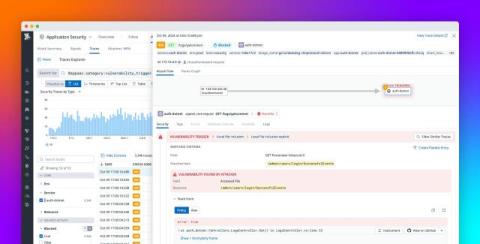
How to prevent log injection vulnerability in JavaScript and Node.js applications

In many standard enterprise applications, consistent logging serves a multitude of purposes. It helps businesses identify and rectify errors, provides valuable analytical insights, and lets you test new solutions. However, this also makes log injections one of the most common ways hackers can hijack or even gain access to sensitive user information.

Critical RCE Vulnerabilities Impacting HPE Aruba Networking Access Points

On September 24, 2024, Hewlett Packard Enterprise (HPE), the parent company of Aruba Networks, released a security bulletin addressing three critical command injection vulnerabilities affecting Aruba Networking Access Points. These vulnerabilities, identified as CVE-2024-42505, CVE-2024-42506, and CVE-2024-42507, could allow remote unauthenticated attackers to execute code with privileged access.

Deep Dive into the Latest API Security Vulnerabilities in Envoy

Envoy has carved out a critical role in cloud-native computing, becoming increasingly prevalent as the default ingress controller for Kubernetes. This high-performance proxy, developed by Lyft and now part of the Cloud Native Computing Foundation’s arsenal, is integral for companies scaling up their Kubernetes deployments. Envoy ensures efficient load balancing, security, and operational agility by managing external access to services within Kubernetes clusters,.