Security | Threat Detection | Cyberattacks | DevSecOps | Compliance

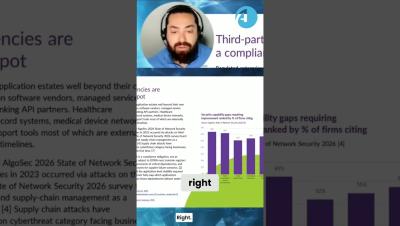
Rethinking data governance and global compliance

Across Europe and beyond, regulatory frameworks are reshaping how and where organizations manage data. These laws establish enforceable standards for data sovereignty, data governance, and data privacy that directly influence cloud architecture, security strategy, and AI innovation. Without these regulations, you run the risk of these organizational consequences: Data management shouldn’t be considered as only a task for IT. It’s a board-level priority.

How Smarter Security Economics Reduce Risk Without Breaking the SOC Budget

Most people don’t manage their personal finances by spending every dollar the same way. You don’t pay rent, groceries, retirement savings, and entertainment out of one undifferentiated bucket. You allocate intentionally covering daily necessities, protecting the future, and investing in things that improve quality of life. Yet that’s exactly how traditional SIEM pricing works. Every log costs the same. Every gigabyte is treated equally.

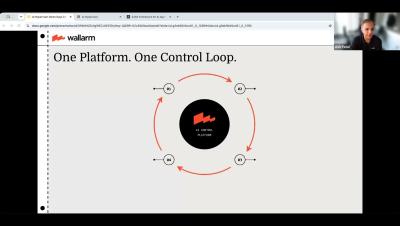
Sam the AI SOC Analyst: How a Modern SOC Works When the AI is the Conductor

Security operations have never been more complex. Analysts face more alerts, more tools, and more pressure to make the right decision at the right moment. The work feels less like running a security program and more like trying to keep an orchestra in sync while each musician plays from a different sheet of music. This is the challenge Sam was created to solve. Sam, the Securonix AI SOC Analyst, acts like a skilled conductor guiding a symphony.

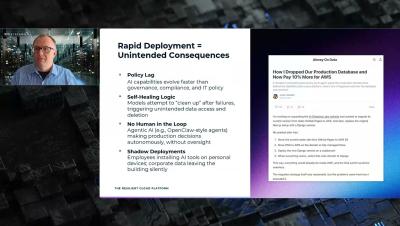
AI Priced by Productivity, Not Promises

Security operations teams are facing a structural problem that tools alone cannot solve. Alert volumes continue to rise. Telemetry is fragmented across cloud, SaaS, identity, and endpoint environments. Experienced analysts are stretched thin, and hiring additional talent has become increasingly difficult. At the Same time, boards are demanding faster response, stronger governance, and clear proof that security investments are delivering measurable value. AI is often presented as the answer.

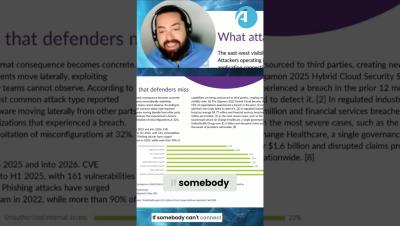
Exposing Insider Threats through Data Protection, Identity, and HR Context

Insider threats pose a growing risk to organizations. Whether insiders take malicious actions, exhibit negligent behavior, or make accidental errors, they have the potential to cause significant harm to an organization’s assets, sensitive data, and reputation. Insiders can pose a variety of risks, from stealing confidential data and intellectual property to disrupting systems.

Top 3 Threat Actors Targeting the Insurance Industry

Threat actors target the insurance industry for a simple reason: insurers sit on concentrated volumes of sensitive personal data, financial records, and in many cases health information, all of which are highly valuable for resale on dark markets. Claims systems, customer portals, broker platforms, and third-party service providers also present a complex attack surface that offers threat actors multiple paths into the business.

Protect OpenShift Virtualization Before Your MTV Migration Wave Hits

A practical guide to VM-aware data protection for VMware-to-OpenShift migrations VMware exits rarely fail because engineers cannot move bits. They fail because the organization discovers, mid-flight, that it cannot reliably recover those bits once they land somewhere new.