Security | Threat Detection | Cyberattacks | DevSecOps | Compliance

Cyber Attackers Leverage Russia-Ukraine Conflict in Multiple Spam Campaigns

The Trustwave SpiderLabs email security team has been monitoring the ongoing Russia-Ukraine crisis to ensure that our clients are protected and aware of any imminent threats. This research blog captures some of the phishing email threats we have discovered. Whenever there is a global event, threat actors are sure to take advantage of the situation. As the war between Russia and Ukraine continues, cybercriminals are pumping out spam emails that use the crisis as a lure.

Companies that impose MFA requirement on all customers

April 2020, Zoom was booming. The start of the COVID pandemic forced employees to work from home, meetings in person migrated to a videoconferencing model, and Zoom was the preferred tool. The massive and fast growth led into an opportunity for attackers. A vulnerability in Zoom could allow an attacker to steal a user’s Windows credentials, as long as the target user would click on a link provided through a Zoom session. The question was then how to get into those private sessions.

CIS Control 14: Security Awareness and Skills Training

CIS Control 14 concerns implementing and operating a program that improves the cybersecurity awareness and skills of employees. (Prior to CIS Critical Security Controls Version 8, this area was covered by CIS Control 17.) This control is important because a lack of security awareness among people inside your network can quickly lead to devastating data breaches, downtime, identity theft and other security issues.

CIS Control 11: Data Recovery

The newly revised and renumbered Center for Internet Security (CIS) Control 11 highlights the need for backups, ensuring smooth and timely recovery of data in case of security breach or misconfiguration. In the current CIS Critical Security Controls (CSC) version 8 of CIS benchmarks, the data recovery control has been pushed ahead to 11. It was previously CIS Control 10 in version 7. CIS Control 11 is a vital player among the 18 cis controls CIS has formulated.

CIS Control 3: Data Protection

The Center for Internet Security (CIS) provides a set of Critical Security Controls to help organizations improve cybersecurity and regulatory compliance. CIS Control 3 concerns ensuring data protection through data management for computers and mobile devices. Specifically, it details processes and technical controls to identify, classify, securely handle, retain and dispose of data.

CIS Control 5: Account Management

CIS Critical Security Controls are powerful tools for helping enterprises assess their vulnerabilities, perform effective cybersecurity risk management, harden their security posture, and establish and maintain compliance with cybersecurity mandates. CIS Control 5 offers strategies to ensure your user, administrator and service accounts are properly managed.

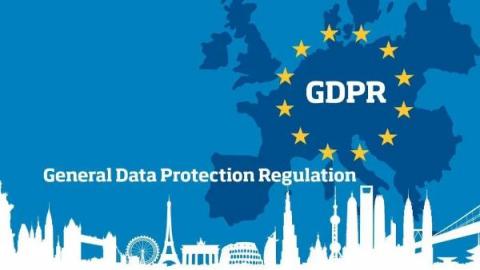
The GDPR Summary: Everything You Need to Know

The General Data Protection Regulation (GDPR) is a new EU data protection law that came into effect on May 25, 2018. The GDPR replaces the 1995 EU Data Protection Directive. It strengthens EU data protection rules by giving individuals more control over their personal data and establishing new rights for individuals. This video provides a summary of the key provisions of the GDPR and explains how they will affect businesses and individuals in the EU.

Secure your cloud from source to run

Security has to change, cloud native is now. Sysdig: Secure your Cloud from Source to Run. Cloud security that avoids, that alerts, closes gaps, grants access, takes charge. That checks out, that scales up, that keeps up. That’s there From source, to run. That’s Sysdig! A single view of risk. With no blind spots. Rich context to prioritize what matters. With no guesswork. A platform based on open standards. With no black boxes.

Spear Phishing: Everything You Need to Know

By now, pretty much anyone who uses email is familiar with the term “phishing,” and is aware of the prevalence of phishing scams. However, the term “spear phishing”—and what it means exactly—might be a bit more elusive. Essentially, spear phishing is a more targeted and socially engineered version of a spray-and-pray, bait-and-hook, phishing email.