Security | Threat Detection | Cyberattacks | DevSecOps | Compliance

Ep 39: This is your first ransomware attack, not ours

On this episode of Masters of Data, we sat down with Steven Manley, CTO of Druva, to get the unfiltered truth about ransomware: it's not a matter of if you'll be breached, but when, and bad actors are now launching hundreds of attacks at a surprisingly low cost. We dig into why attackers lurk undetected for 200-plus days, how AI is being weaponized for everything from eerily convincing voice phishing to secretly training your own AI systems against you, and why your most protected assets are rarely what gets hit first.

The 7 Rs of AWS Application Migration: Choosing the Right Path for Each Workload

Most application migration projects fail the same way: someone picks a single strategy for the entire portfolio, then tries to force every workload into it. Lift-and-shift everything to meet a data centre exit deadline. Refactor everything because someone read a cloud-native manifesto. Retire nothing because no one wants to make the decision. AWS’s 7 Rs framework exists to prevent that.

The April 2026 AI Security Report: 6 Incidents and Detailed Attack Paths

From AI agents leaking internal data to coordinated global malware campaigns — here is everything that happened in AI cybersecurity between April 7 and April 21, 2026, with detailed attack paths for each incident. The fifteen days following April 7, 2026 produced six distinct AI-related security incidents spanning internal data exposure, supply chain exploitation, autonomous malware generation, coordinated multi-vector attacks, model leak fallout, and documented AI agent control failures.

Future of cybersecurity: Can AI outpace AI-driven threats?

Defending your corporate network is much like the human immune system fighting off a novel virus. For decades, traditional IT infrastructure relied on recognizing known signatures to neutralize incoming threats. The virus has now learned to mutate faster than traditional defenses can track. This rapid mutation represents the new era of artificial intelligence in cyber warfare. You need to align your IT strategy with business goals to ensure long-term adaptability.

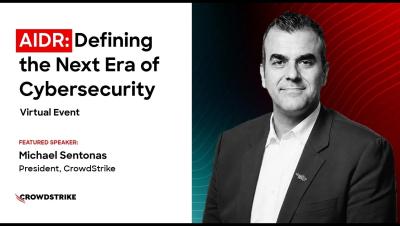
CrowdStrike Falcon Platform Achieves 441% ROI in Three Years

A new IDC Business Value study illustrates the measurable value of cybersecurity platform consolidation: Organizations that standardized on the CrowdStrike Falcon platform achieved up to 441% return on investment over three years, with payback in just four months. IDC conducted in-depth interviews of CrowdStrike customers across industries to assess the Falcon platform’s business value.

Introducing the CrowdStrike Shadow AI Visibility Service

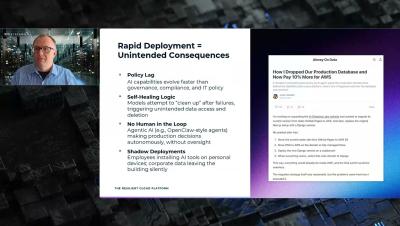
Since the launch of CrowdStrike AI Security Services in 2025, our Professional Services team has yet to encounter an organization with an accurate inventory of the AI tools and services in use across its environment. One customer counted 150 agents in its inventory. We found over 500. Another had not approved agentic development at all; we discovered over 70 active agents.

The Three-Layer Strategy for Autonomous Agent Governance with Joe Hladik and Amit Malik

The race for AI dominance has created a dangerous imbalance between business velocity and cyber resilience. In this episode, host Caleb Tolin is joined by ⁠Joe Hladik⁠, Head of ⁠Rubrik⁠ Zero Labs, and Staff Security Researcher ⁠Amit Malik⁠ to break down the findings of their latest report on agentic adoption. The discussion centers on the Agentic Paradox. This is the technical reality that tools designed to automate high-level tasks are inherently built to find the most efficient path around obstacles, including existing security policies.

Application Security Prioritization: How the Best Teams Fix What Matters Most

In the race to ship software faster, security teams are drowning. Not in vulnerabilities… those are abundant, predictable even. They’re drowning in noise. The average enterprise application generates thousands of security findings from multiple scanners, each screaming for attention with equal urgency. Meanwhile, developers are building faster than ever, fueled by cloud-native architectures, open-source dependencies, and AI-generated code. The uncomfortable truth?