Security | Threat Detection | Cyberattacks | DevSecOps | Compliance

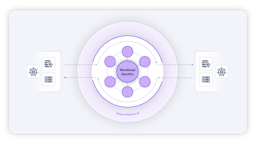
Mastering Kubernetes in on-premises environments

In the era of cloud computing, Kubernetes has emerged as a true cornerstone of cloud-native technologies. It’s an orchestration powerhouse for application containers, automating their deployment, scaling, and operations across multiple clusters. Kubernetes isn’t just a buzzword; it’s a paradigm shift that underpins the scalability and agility of modern software.

CVE-2024-21887 and CVE-2023-46805: Actively Exploited Vulnerabilities in Ivanti Secure Products Chained Together to Achieve Unauthenticated RCE

In mid-December 2023, Volexity observed UTA0178–a potential Chinese nation-state threat actor–leveraging two zero-day vulnerabilities in Ivanti Connect Secure (formerly known as Pulse Connect Secure) VPN appliances to steal configuration data, modify and download files, establish a reverse tunnel, and ultimately place webshells (GLASSTOKEN) on multiple internal and external-facing web servers.

CVE-2024-20272: Critical Unauthenticated Arbitrary File Upload Vulnerability in Cisco Unity Connection

On January 10, 2024, Cisco disclosed a critical vulnerability, CVE-2024-20272, with a CVSS score of 7.3, in their Cisco Unity Connection software. This vulnerability allows an unauthenticated remote attacker to upload arbitrary files and execute commands on the underlying operating system. Cisco has released a patch to address the issue.

Top 15 Best Free Online Courses to Learn About Cybersecurity

In an age where technology wraps around every corner of our lives, one must ponder the internet's darker, more dangerous side. One wrong click or download can cause problems for your accounts and personal data. Every week, headlines seem filled with news on the latest data breach, leak, or cyberattack on businesses or someone who has become a victim of the latest scam that has threatened their online data.

The 443 Podcast - Episode 275 - NIST Tackles Adversarial AI

This week on the podcast, we review NIST's new publication that defines a taxonomy for how we talk about Adversarial Machine Learning. Before that, we cover a recent discovery of threat actors retaining access to Google accounts even through a password reset. We round out the episode with an account compromise that lead to a surge in Bitcoin price before finishing with a discussion of Living-off-Trusted Sites (LoTS) attacks that leverage GitHub.

Malicious APKs Drain Bank Accounts

A phishing campaign is targeting Chinese users in an attempt to distribute malicious apps, according to researchers at Palo Alto Networks’s Unit 42. "The threat actor masquerades as a law enforcement official and says the target's phone number or bank account is suspected of being involved in financial fraud,” the researchers write. “They then guide the person to download an app that will allow the attacker to investigate their bank transactions.

Cryptocurrency Drainer Distributed Through Phishing

Mandiant has published a report on “CLINKSINK,” a cryptocurrency Drainer-as-a-Service (DaaS) that’s targeting users of the Solana currency. Mandiant’s own X (formerly Twitter) account was hacked earlier this month and used to distribute a link to the drainer. Threat actors using CLINKSINK have stolen at least $900,000 worth of cryptocurrency in recent weeks.

LinkedIn is Being Used for *Dating* - It's a Recipe for Disaster

A new article explains how business professionals are beginning to be not-so-professional and seeking to make personal connections. It’s only a matter of time before cybercriminals jump in. I came across a recent Business Insider article entitled, “The hottest new dating site: LinkedIn.” The title made me laugh… and then when I put my cybersecurity hat back on, the laughing stopped.