Security | Threat Detection | Cyberattacks | DevSecOps | Compliance

Proof-of-concept exploit released for PHP vulnerabilities (CVE-2026-109618, CVE-2026-109619)

In response to requests, this update consolidates the Sophos countermeasures that relate the PHP2Shelll vulnerabilities. SophosLabs has developed the following countermeasures to specifically detect activity associated with this threat. The next table lists additional pre-existing Sophos countermeasures that will likely address post-exploitation activity associated with these vulnerabilities.

Web App Owners - You're on Notice. Your Low-Hanging Fruit Just Got Lower

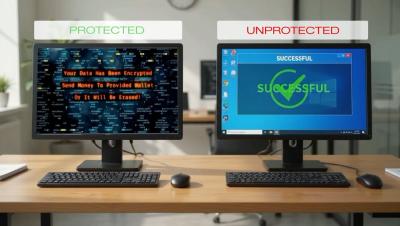
Recent incident response investigations reveal how AI-assisted attackers are chaining web application vulnerabilities, credential theft, privilege escalation, and lateral movement into autonomous intrusion workflows. This article is part of an ongoing series from Sophos frontline security operations specialists, sharing the expertise they use to strengthen our industry-leading Managed Detection and Response (MDR) service and defend customers against evolving AI-era threats.

Why Incident Response Demand Will Grow Faster than Expected

This article is part of an ongoing series from Sophos frontline security operations specialists, sharing the expertise they use to strengthen our industry-leading Managed Detection and Response (MDR) service and defend customers against evolving AI-era threats. A 20% growth forecast for cybersecurity talent sounds significant. I believe it understates what we are going to see in Incident Response. The U.S.

BRONZE SANDCASTLE deploys modified Meterpreter shells

The China-based threat group uses DLL sideloading in these attacks Counter Threat Unit (CTU) and SophosLabs researchers investigated a cluster of incidents attributed to the BRONZE SANDCASTLE threat group. The most distinctive technical marker for BRONZE SANDCASTLE is its consistent use of Sandboxie DLL sideloading.

ConnectWise Cloud Backup application abused in cross-tenant token sweep

Automated sign-ins used the vendor's Entra application identity to request Microsoft Graph tokens across consenting tenants On October 15, 2026, Sophos X-Ops researchers identified a series of service principal sign-ins in which a threat actor authenticated as the ConnectWise Cloud Backup application (formerly SkyKick) and requested app-only Microsoft Graph tokens from customer Microsoft 365 tenants.

Beyond the mailbox: Graph reconnaissance and ServiceNow user enumeration in a modern identity intrusion

Traditional business email compromise (BEC) is often thought of as a mailbox problem: a stolen account, unauthorized access to email, forwarding rules, and (sometimes) outgoing mail impersonating the compromised user. But more recent incidents show how far beyond “email only” these intrusions can extend once an attacker gains control of a cloud identity.

Sophos Firewall: DNS enhancements

Sophos Firewall v23 brings new DNS enhancements including DNS-over-HTTPS (DoH) support, DNS security extension (DNSSEC) support, and one-click Secure DNS set up, made possible through native integration with Sophos Fusion. Learn about the new enhancements and the steps to set up Secure DNS Protection, third-party DNS services, and DNSSEC protection. Ask questions and get expert answers in the Sophos Community.

Sophos ITDR expands identity protection for the AI era

Sophos ITDR now delivers deeper AI identity visibility, expanded Microsoft support, faster response, and seamless deployment. Identity has become one of the most targeted attack surfaces in cybersecurity, with attackers increasingly relying on stolen credentials, compromised sessions, excessive privileges, and identity misconfigurations to gain access.

Sophos Fusion: Securing the AI Era for MSPs

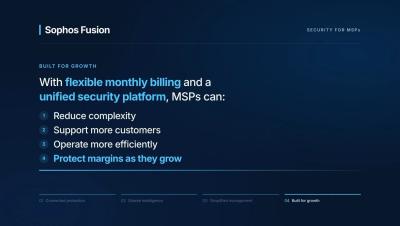
Discover how Sophos Fusion helps Managed Service Providers (MSPs) simplify operations, improve security outcomes, and grow profitability with an AI-native cybersecurity defense system. Chapters Introduction to Sophos Fusion Unified Defense vs. Disconnected Tools Connected Protection Stack (Endpoint, Firewall, Email, MDR, Identity, Network) Shared Intelligence and Unified Response Simplified Management (Multi-tenant, Automation, RMM/PSA Integrations)