Sophos Fusion isn't another platform. It's an AI-native cyber defense system that connects security controls, intelligence, data, services, and human expertise into one coordinated defense. Watch Raja Patel explain the foundation of Sophos Fusion and how it's built for the AI era.
Outdated protocols, forgotten configurations, and legacy dependencies continue to create opportunities for attackers in modern environments. This research explores how NetNTLMv1 can still be leveraged today and how improvements in attack tooling are reducing the cost and complexity of exploiting it.
A step-by-step tutorial showing you how to define your Sophos Managed Detection and Response (MDR) authorized contacts and threat response mode in Sophos Central. As a Sophos MDR customer, assigning authorized contacts lets you fully utilize the service. This instructs the Sophos MDR Operations team who to contact and how to take action during an active threat. You're prompted to take these steps in Sophos Central after activating a new Sophos MDR license, and you can modify this information at any time.
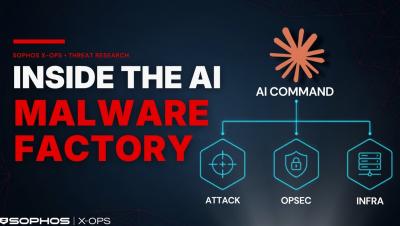
A criminal talked commercial AI models past their guardrails. Then stood up a "company" of AI agents that engineered, tested and refined malware. It began when Sophos analysts found a folder named "test" on an endpoint nobody recognised. Inside was the front end of a machine: Cobalt Strike profiles, a Telegram command channel, a hidden Sliver server behind Cloudflare and scripts written with the help of AI.
Counter Threat Unit (CTU) researchers investigated a June 2026 campaign in which threat actors used the Deno JavaScript runtime as a core execution mechanism within a ClickFix-driven intrusion chain. On June 3 and June 4, compromised WordPress sites served Cloudflare-themed ClickFix lures that prompted users to execute a clipboard-delivered PowerShell command. This command initiated an MSI-based staging process that installed Deno and enabled retrieval and execution of remote JavaScript.
A dedicated channel partnership brings frontier AI to the channel and service providers through Sophos Fusion, powering new security services partners can build on.
Sophos Fusion is not a platform. It's not a stack. It sees everything, connects everything, and enables your defenses to respond as one. It’s the industry’s most complete cyber defense system, engineered for a world where threats move at AI speed.
Sophos AI Defense helps you understand how AI is used across your organization, apply guardrails, and reduce risk using the Sophos security controls you already have.