Security | Threat Detection | Cyberattacks | DevSecOps | Compliance

API Gateway Security: The Essential InfoSec Guide

As the software world shifted toward microservices and distributed architectures, the volume and complexity of API traffic have skyrocketed. Unfortunately, so has the number of API-related breaches and cyber attacks. Last year, nearly 44% of all advanced bot traffic online targeted API endpoints, while traditional web applications received just 10% of the malicious traffic. It’s no surprise that 57% of organizations admit to having suffered API-related breaches in the past two years.

Top 10 Identity Lifecycle Management Tools

Often overlooked, identities are prime targets for bad actors. In December 2024, a compromised API key in the BeyondTrust Remote Support SaaS environment was enough to cause a privilege escalation attack. The year before, Microsoft hit the headlines as an SAS token leak exposed over 38TB of sensitive data. The good news is that simplifying user access and eliminating security risks from standing privileges has never been more achievable thanks to the right identity lifecycle management (ILM) tools.

What Are Non-Human Identities, and Why Should Security Teams Care?

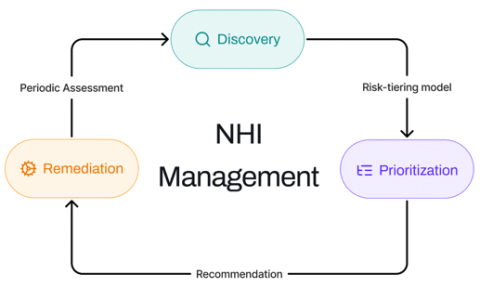
Security breaches are increasingly expensive and harder to spot, extending beyond common attacks like phishing. Attackers are now targeting the least visible parts of your infrastructure: non-human identities (NHIs). NHIs outnumber human identities by 45:1 in cloud environments—these include service accounts, APIs, applications, and bots that interact with systems and access sensitive data.

Apono Expands Cloud Access Management Platform to Secure Both Human and Non-Human Identities with Scale and Speed

With this release, Apono provides customers a unified cloud access solution that delivers automated, Just-in-Time, Just Enough access for every identity—whether person or machine.

8 Key Risks of Non-Human Identities: From Data Breaches to Credential Stuffing

You’ve probably spent years securing human identities, employees, contractors, and admins. But there’s a growing blind spot: Non-human identities (NHIs). Every application, microservice, API, and automated process running in your environment has an identity. They run your CI/CD pipelines, access sensitive data, and connect systems behind the scenes. These identities often hold powerful privileges that are difficult to manage without visibility and the right tools.

Better Together: Introducing Apono's Advanced PagerDuty Integration

At Apono, integrations are about creating seamless workflows, enhancing security, and providing exceptional experiences for engineering teams. We’re excited to announce our enhanced integration with PagerDuty because incident management and access control are truly better together.

8 Tips for Kubernetes Role-Based Access Control (RBAC)

The weakest link in your infrastructure might just be your permissions. In Kubernetes, permissions exist to protect your cluster, but if you’re not careful, they can become your number one problem. How? A single misconfigured access role in a Kubernetes cluster can open the door to a full-scale security breach. Yes, your network policies and firewalls are in place, but when a bad actor can kubectl delete a namespace from inside your cluster, the real breach point is access control.

A Step-by-Step Guide to S3 Security Features & Setup

As the gold standard for reliably storing files of varying types in the cloud, Amazon’s S3 has become synonymous with storage. While this widespread adoption is a sign of a good developer experience and reliable storage across the board, it also presents a unique opportunity for attackers looking to exploit multiple targets due to S3’s widespread adoption.

Just-In-Time (JIT) Access Management: The Essential Guide

Standing privileges are a ticking time bomb in your cloud environment—and the threat might be closer than you think. Every user with continuous access represents a potential vulnerability, and the financial, reputational, and legal reputations can be severe. Stolen credentials were among the top three reasons hackers gain access to organizations’ systems.

Top 10 IAM Tools by Category

The explosion of remote work and digital transformation has unleashed a tidal wave of new systems and software. Even smaller or ‘old-school’ companies are juggling more applications than ever before to keep pace with collaboration and automation in the remote age. Yet, every exciting new system requires login credentials, secrets, and access privileges, creating potential entry points for cybercriminals.