Security | Threat Detection | Cyberattacks | DevSecOps | Compliance

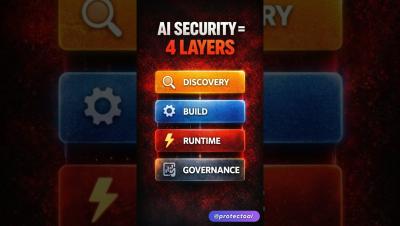
Top 3 Skills for AI Security in 2026 #shorts

Are your cybersecurity skills ready for the AI era? In this clip, we reveal which traditional security frameworks still work and the one new mental shift you need to survive. It’s not just about code anymore—it’s about "Socio-Technical" thinking. Raji (Microsoft AI Security) breaks down exactly how to future-proof your career.

Sensitive Data Is the Common Thread Across Most OWASP Top 10 Issues. Here's Why

The OWASP Top 10 is usually presented as a list of technical failures. Broken access control. Injection. Insecure design. Misconfiguration. Each category points to something that went wrong in the application. What it doesn’t say explicitly is what was actually at risk when it went wrong. In most real incidents, the answer is not “the application.” It’s the data inside it. Sensitive data is the reason attackers care about OWASP failures in the first place. Credentials.

Stop Ignoring This AI Bug! (Safety Security) #shorts

Are you confusing AI Safety with AI Security? In this clip, we break down why AI is a "Socio-Technical" system and why that matters for your code. We ask the expert: How do you handle "Safety Bugs" (like bias) versus traditional "Security Bugs" (like hacks)? The answer might save your next project. Subscribe for more AI Security insights! @protectoai.

How OWASP Top 10 Maps to Data Exposure Risks: 5 Hidden Threats Explained

Most teams learn the OWASP Top 10 as a list of application security failures. Injection flaws. Broken access control. Security misconfiguration. Items to scan for, remediate, and close before the next audit or penetration test. But data exposure rarely arrives neatly packaged as a single OWASP finding. When sensitive data leaks, it is almost never because one category failed in isolation.

Agentic AI Security: How Microsoft Prevents Autonomous Agent Attacks?

As agentic AI systems move into the mainstream—powered by tool calling, MCP, and autonomous workflows—security is no longer a “nice to have.” It’s mission-critical. In this episode, we sit down with Raji, Principal Engineer & Manager for AI and Safety at Microsoft, to deep-dive into the rapidly evolving world of AI security, autonomous agents, and enterprise governance. Discover how Microsoft identifies and mitigates risks in agentic AI, distinguishes AI Security vs AI Safety, and enables organizations to deploy autonomous systems safely at scale—without slowing innovation.

Unlocking AI Data Security: Strategic Solutions

AI systems are no longer experimental. They sit at the center of product experiences, internal workflows, and customer-facing automation. As soon as an AI feature ships, it starts handling real data. Customer messages. Internal documents. Support tickets. Logs. Training samples. That’s when AI data security stops being an abstract concern and becomes a product requirement.

How to Add Privacy to Your LangChain Agent in 3 Lines of Code

If you’re building with LangChain, you’re moving fast. That’s the point. Agents are pulling from tools, chaining prompts, summarizing documents, and responding to users in real time. But there’s a quiet truth many teams discover a little too late: Your agent is probably handling personal data—even if you didn’t design it to. Emails show up in prompts. Names appear in support tickets. Internal notes include phone numbers, IDs, or customer context.

The Hidden Costs of Building Your Own Data Masking tool

Building an in-house data masking tool often starts as a practical decision. The logic feels sound. Your team understands the data, knows the systems, and can tailor masking logic exactly to your needs. On the surface, it looks like a short engineering project that saves licensing costs and avoids external dependencies. What we’ve learned, after observing many organizations take this path, is that the hidden costs of building your own data masking solution rarely appear during the initial build.

Why Preserving Data Structure Matters in De-Identification APIs

When it comes to data masking or de-identification, one often-overlooked detail is the importance of preserving the original data structure. While it might seem harmless to normalize extra spaces or convert unique newline characters into a standard format, these subtle changes can actually have a significant impact on downstream processing. Let’s explore why this matters, with a couple of concrete examples.

Regulatory Compliance & Data Tokenization Standards

Organizations across finance, healthcare, retail, and especially AI-driven sectors are facing increasing pressure from global regulators. The rapid expansion of AI, the growth of cross-border data flows, and the rise of new privacy frameworks all contribute to a landscape that demands more structure and accountability. In this environment, regulatory compliance and data tokenization are becoming inseparable.