Security | Threat Detection | Cyberattacks | DevSecOps | Compliance

SASE Talks on the Couch with Cato Networks' Abraham Gonzalez

Abraham’s got years of field experience, and he knows why customers hesitate: promises that never deliver. But once they see Cato in action, their perspective shifts completely. Watch below as Abraham shares a memorable moment when Cato made a customer's phone system work for the first time, all while delivering simplicity, power, and results. Ready to see a true SASE platform in action? Book a demo today.

Patching is Risky Business: By the Gartner Numbers

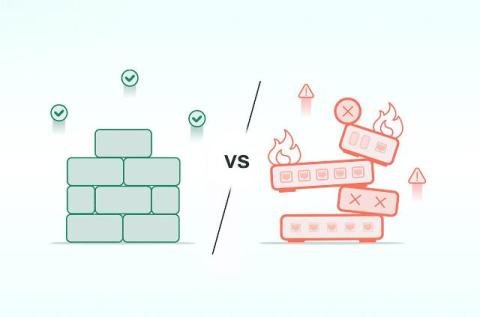
When I read Eyal’s blog, Why FWaaS is the Only Way Out of Endless Appliance Patching, I imagined a time in the immediate now (oxymoron intended); a time where the word “patching” is as quaint as rotary phones. In my mind, I was Marty McFly, jumping out of the DeLorean, shocked to discover that in the year 2025, we’re still patching appliance boxes. But here’s the kicker: everything has changed. Except the way we think about patching.

Cato CTRL Threat Research: Inside Shadow AI - Real-World Generative AI Application Usage Trends in SASE

The rapid adoption of generative AI (GenAI) in the enterprise is introducing a new category of unmanaged risk known as shadow AI. Organizations frequently lack insight into which employees are using GenAI tools and how they are being accessed, resulting in visibility limitations, policy enforcement challenges, and increased risk of data exposure. Security teams face potential data leaks and compliance violations, while IT teams struggle to integrate GenAI usage into existing governance models.

Why Swissport Chose Cato Networks to Secure and Streamline its Global IT Infrastructure

Swissport International AG is the world’s largest ground-handling company, ensuring seamless operations across 276 airports in 45 countries handling approximately 247 million airline passengers per year, as of the end of 2024. That kind of scale brings complexity. For Swissport’s new IT leadership, that complexity had grown into an unsustainable mix of legacy security controls, fragmented remote access solutions, and painfully slow troubleshooting. Then came the shift.

Cato CTRL Threat Research: Exploiting Model Context Protocol (MCP) - Demonstrating Risks and Mitigating GenAI Threats

Generative AI (GenAI) is advancing rapidly, offering significant potential for business transformation. However, it also introduces new security risks. The Model Context Protocol (MCP), an open standard introduced by Anthropic in November 2024, enables seamless integration between GenAI applications and external data sources and tools. MCP is commonly referred to as a USB-C port for GenAI applications.

Generative AI Usage Gone Rogue? Cato Networks Mitigates Shadow AI Risk with Cato CASB

Today during SASEfy 2025, Cato Networks announced its latest AI innovation. Cato CASB (Cloud Access Security Broker), a native feature in the Cato SASE Cloud Platform, is now enhanced with new capabilities for generative (GenAI) applications including a shadow AI dashboard and policy engine. With the shadow AI dashboard, enterprises can detect, analyze, and gain insights into the use of GenAI. With the policy engine, enterprises can take control of user activities in GenAI applications.

Cato CTRL Threat Research: OpenAI's ChatGPT Image Generator Enables Creation of Fake Passports

On March 25, OpenAI introduced image generation for ChatGPT-4o and ChatGPT-4o mini. On March 31, it was announced that the tool was available for free to all users. Since then, users have quickly discovered that ChatGPT’s image generator can be manipulated to create fake receipts and forge other documents.

Say Goodbye to SaaS Security Gaps with Cato CASB

As organizations increasingly depend on SaaS applications, IT teams struggle with visibility and governance. Shadow IT, unmanaged devices, and limited monitoring capabilities create blind spots, exposing enterprises to compliance violations, data exfiltration, and insider threats. Risks don’t come only from unsanctioned applications: even widely used SaaS platforms can become a security liability when not properly controlled.

The Future of SASE: Simplifying IT and Securing the Future

SASE emerged to address the challenges of digital transformation, providing the means to connect and secure enterprise resources – sites, remote users, and cloud resources — through a single, global network and security stack. The next phase of SASE will extend both its capabilities (what it delivers) and its delivery model (how it operates). AI will play a pivotal role in automating and optimizing SASE, while the scope of SASE will extend beyond the WAN to include LAN and cloud security.