Security | Threat Detection | Cyberattacks | DevSecOps | Compliance

It's All About the Network-Welcome, Circle!

If there’s one truth in payments, it’s this: the network always wins. Think of what Visa and Mastercard created: not just payment rails, but global ecosystems of merchants, issuers, acquirers, and processors. Their networks didn’t just move money—they connected entire economies. As digital assets move into the mainstream, the same principle applies. But the networks of tomorrow won’t be built on closed systems and settlement delays.

Unlocking Profit: How Bankers Can Harness Stablecoins for Revenue Growth

Brian Moynihan recently remarked, “It’s pretty clear there’s going to be a stablecoin… So if they make that legal, we’ll go into that business …it’s just then like another foreign currency.” While the comments from the CEO of Bank of America capture one bank use case for stablecoins, these digital assets have much more to offer banks than that.

Antagonistic Harmony: Permissioned and Permissionless Blockchains in Tomorrow's Financial System

The rise of blockchain has fundamentally reshaped the financial ecosystem. Since Bitcoin’s genesis in 2009, permissionless blockchains have introduced an open, decentralized model for transacting value—fueling everything from DeFi to NFTs. Meanwhile, traditional financial institutions (FIs), drawn to the benefits of blockchain yet cautious of its risks, have leaned into permissioned systems that offer control, privacy, and compliance.

March of the Digital Assets

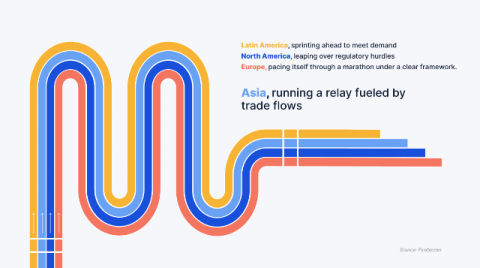
Each month, the Fireblocks policy team takes stock of policy developments around the world that matter to our clients and to our business. Here, I share my views on the March developments I think counted the most—at times intentionally highlighting announcements that didn’t make the headlines. Starting counter-sun-wise, Washington DC saw the U.S. commitment to becoming digital asset centre of gravity take more and more concrete shape.

44% of US Banks Actioning Their Digital Asset Journey, with Payments as Top Use Case

Not surprisingly, with the new US administration bringing in new policies to support digital asset regulations, US banks have been asking Fireblocks what opportunities this creates for them. In a recent webinar with American Banker, we polled US banks to get insights into how they are incorporating digital assets into their strategies. Here’s what we found.

Expanding Access to Solana: Bringing More Volume On-Chain with Native Integrations

The institutional adoption of Solana is accelerating at an unprecedented pace, driven by its unmatched speed, efficiency, and scalability.. Its growing adoption by financial institutions and Web3 developers highlights its efficiency in real-time payments and tokenization. However, challenges remain in securely managing transactions, gas fees, and token operations.

Policy Implications from the Rise of State-Sponsored Crypto Crime

Supporting Japan FinTech Week has become a Fireblocks tradition. This March, we, as many in the ecosystem, chose to re-contextualize planned contributions and engagements as the week-long Tokyo event was the first significant global gathering of both regulators and industry after the Bybit hack.

Fireblocks' New Developer APIs: Build on Blockchain Without Complexity

Blockchain innovation is accelerating, offering new opportunities for developers to create secure applications. However, integrating blockchain infrastructure is getting increasingly complex. With more fragmentation, developers often have to juggle multiple tools, workarounds, and technical intricacies to manage network data, retrieve asset properties, and execute transactions effectively. This slows down innovation, increases operational overhead, and diverts focus from building great products.

Disaster Recovery Services: A New Standard for Digital Asset Security

It’s common for many organizations to postpone establishing a robust Disaster Recovery Program until after their product is already in the market. While development and operational builds are critical for launching an outstanding product, disaster recovery planning often gets sidelined. However, it’s increasingly important for institutions to prioritize the safekeeping of private key materials, which are crucial for accessing and managing digital assets.