Security | Threat Detection | Cyberattacks | DevSecOps | Compliance

Featured Post

Digital Twins: Revolutionizing Network Management and Cybersecurity

Digital Twins, virtual replicas of physical objects, systems, or processes, have been steadily gaining traction in the technology sector, particularly in networking and security. These sophisticated models have the potential to revolutionize network management and cybersecurity by offering a dynamic, real-time, and comprehensive approach to managing, optimizing, and securing complex systems. McKinsey & Company underscores that Digital Twins have become indispensable business tools for leading companies and are poised to become pivotal in optimizing processes and decision-making across every industry.

How a Network Digital Twin (NDT) Powers Scalable Network Automation

In the race to modernize IT operations, automation is no longer optional—it’s essential. For network teams tasked with managing complex, hybrid environments, a Network Digital Twin (NDT) provides the trusted foundation required to automate intelligently and confidently. By offering an always-accurate, mathematically-precise virtual copy of your network, an NDT accelerates automation across key operational domains—enabling safer changes, faster audits, and more resilient infrastructure.

Simplify Network Management with a Single Source of Truth

Managing complex networks can feel like an endless challenge, especially when critical data is scattered across multiple tools and systems. Conflicting sources of truth (SOTs) introduce risks, leaving IT teams uncertain about which data to trust. Without an accurate view of your network, tasks like CVE management, troubleshooting, and compliance become overwhelming—and potentially introduce risk into the network.

Network Digital Twins Deliver Reliable AI Outcomes

In the realm of artificial intelligence (AI), especially when applied to networking and security, the accuracy and reliability of data are paramount. AI systems are only as good as the data they consume, and for network engineers, feeding these systems with up-to-date and precise information can make the difference between optimal performance and costly errors.

5 Ways a Network Digital Twin Can Revolutionize CVE Compliance

In the rapidly evolving cybersecurity landscape, the sheer volume of Common Vulnerability and Exposure (CVE) notices has become a daunting challenge for SecOps teams. In 2023 alone, the National Institute of Standards and Technology (NIST) issued 28,901 CVE notices, reflecting the growing complexity and intensity of potential threats.

How a Network Digital Twin Prevents Change-Related Outages

In today's rapidly evolving IT landscape, effective change management is crucial for maintaining network stability and performance, but many organizations lack a consistent change process. Lack of process often leads to unintended consequences, such as outages and performance degradation. A network digital twin offers a transformative solution to these challenges by streamlining change management processes and providing pre- and post-change verification to enhance operational efficiency.

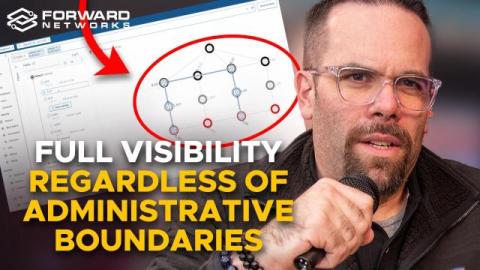
The Challenges of Full Network Visibility and How a Network Digital Twin Can Help

In today’s complex IT environments, maintaining full network visibility is a daunting task. Network segmentation, while essential for security, often complicates the process of obtaining a comprehensive view of the entire network infrastructure. Federal IT departments charged with the responsibility of keeping networks mission-ready, face significant hurdles in visualizing connectivity, ensuring security zone segmentation, and performing complete path searches across segmented domains.

Network #digitaltwin plus AI Assist #networksecurity #networkengineer

AI Assist is a groundbreaking generative Artificial Intelligence (AI) feature that is now integrated into Forward Enterprise. This cutting-edge feature empowers NetOps, SecOps, and CloudOps professionals to gain comprehensive network insights and expedite solutions for their most demanding intricate network challenges through natural language prompts.