Security | Threat Detection | Cyberattacks | DevSecOps | Compliance

Why Short Correlation Windows Miss Insider Risk

Short correlation windows miss insider risk because misuse develops gradually, often over longer periods than detection models track. Short correlation windows miss insider risk because misuse often spans longer periods than detection models track. When context resets at fixed intervals, small behavioral changes fail to accumulate into visible risk. When context resets at fixed intervals, behavior is evaluated in disconnected segments.

Ep. 64 - The Mythos Hype Index: What AI Really Did to the Zero-Day Curve

Every CISO is asking it: now that frontier models like Claude Mythos and ChatGPT 5.5 have real offensive cyber capability, are zero days surging? Host Tova Dvorin and SafeBreach offensive engineer Adrian Culley dig into the mid-2026 data—GTIG, Mandiant M-Trends, Rapid7, AISI—and find the curve moved in shape, not volume. Inside: the two AI "firsts" (Big Sleep and a 2FA-bypass exploit), why commercial spyware explains the rebound, the negative-seven-day time-to-exploit, and why defender deployment is the real bottleneck.

How to Build Privacy-First AI Systems in 2026

Your RAG pipeline goes live on a Monday. By Friday, a customer query is surfacing another user’s account number in a response. Privacy-first AI stops that before the data reaches any model. More than half of organizations have already experienced an AI-related security incident, according to Check Point’s 2026 Cloud Security Report, and most don’t catch it until an audit forces the issue. Start with AI data privacy concepts and best practices.

The Top 5 M365 Security Gaps MSPs Find in New Customer Tenants

Most MSPs don’t have a security problem because they are missing tools; but because the tools they already have aren’t properly configured. Microsoft 365 includes a wide range of powerful security features designed to protect identities, data, and access. Over time, however, tenant configurations change: users are added, permissions are expanded, policies are adjusted, and temporary “duct tape” solutions become permanent.

Least Privilege Access for AI Agents: How to Secure Autonomous Systems in 2026

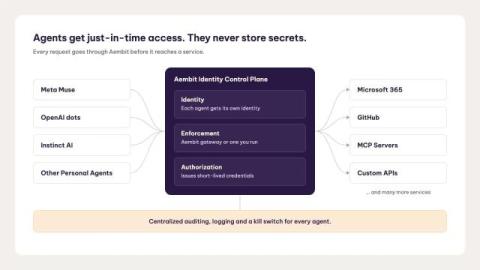
AI agents are no longer just answering queries or summarizing documents. They are booking meetings, pulling customer data, triggering workflows, and even making decisions across systems. And they don’t ask for permission every time. That’s where the real problem starts. Because once an AI agent is connected to your tools, APIs, and internal systems, the question isn’t what it can do, it’s what it should be allowed to do.

New in miniOrange PAM: Bringing EPAM to Windows and macOS

Privileged access has become significantly more complex over the last few years. Security teams are managing Windows and macOS devices, administrators rely on native tools to do their jobs, network infrastructure continues to expand, and operational technology environments are becoming increasingly interconnected. At the same time, manual approval processes and fragmented controls often create more friction than protection.

How Keeper Protects Against Brute Force Attacks on Password Manager Device Registration

Password managers are among the most helpful security tools available, offering strong password generation and encrypted credential storage. However, attackers are beginning to target password managers by exploiting the device registration flow, which is the process used to verify and approve a new device before it can access a user’s vault. By brute-forcing the One-Time Passwords (OTPs) that protect this step, attackers can register unauthorized devices and download copies of encrypted vaults.

Data Governance vs. Data Security

Most organizations treat data security and data governance as parallel tracks managed by separate teams with separate tooling. Security owns the controls; governance owns the policies. The two programs rarely share a roadmap, and the gaps between them are where data risk actually lives. Governance without security enforcement leaves policy on paper. Security without governance context produces alerts without the underlying understanding of what the data is, who owns it, or why it matters.