Security | Threat Detection | Cyberattacks | DevSecOps | Compliance

Why we need a unified approach to Kubernetes environments

Today, organizations struggle managing disparate technologies for their Kubernetes networking and network security needs. Leveraging multiple technologies for networking and security for in-cluster, ingress, egress, and traffic across clusters creates challenges, including operational complexities and increased costs.

What's New in Calico: Spring 2025

Calico provides a unified platform for all your Kubernetes networking, network security, and observability requirements. From ingress/egress management and east-west policy enforcement to multi-cluster connectivity, Calico delivers comprehensive capabilities. It is distribution-agnostic, preventing vendor lock-in and offering a consistent experience across popular Kubernetes distributions and managed services.

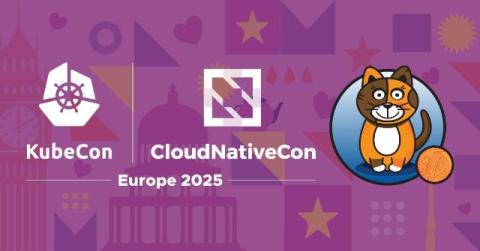
Recap: KubeCon + CloudNativeCon Europe 2025

When I got the assignment to attend KubeCon 1st of April I thought it was an April prank, but as the date got closer I realized—this is for real and I’ll be on the ground in London at the tenth anniversary of cloud native computing. I’ve seen a lot of tech events during my years in the industry while trying not to get replaced by AI and I have to say this one stands out! Image source: CNCF YouTube Channel Here is my recap of KubeCon + CloudNativeCon Europe 2025.

Introducing Calico 3.30: A New Era of Open Source Network Security and Observability for Kubernetes

When we first launched Project Calico in 2016, we set out to make Kubernetes networking easy, reliable, and scalable for all organizations. Our goal was to abstract away the complexity and performance overheads of other CNI plugins while simultaneously extending Kubernetes network policy to make it easier to secure your Kubernetes workloads.

How Calico Network Security Works

In the rapidly evolving world of Kubernetes, network security remains one of the most challenging aspects for organizations. The shift to dynamic containerized environments brings challenges like inter-cluster communication, rapid scaling, and multi-cloud deployments. These challenges, compounded by tool sprawl and fragmented visibility, leave teams grappling with operational inefficiencies, misaligned priorities, and increasing vulnerabilities.

Kubernetes Network Security at Scale: Troubleshooting, Visibility & Compliance with Calico

Kubernetes adoption continues to grow as enterprises increasingly rely on containerized environments to deploy and scale their application. However, the complexity of the Kubernetes environment has evolved dramatically. It ranges from single-cluster setups of workloads to multi-cluster environments spanning hybrid and multi-cloud infrastructure. Kubernetes deployments are now characterized by their scale and diversity.

Debugging Connectivity in Calico eBPF: The Mysterious bpfDataIfaceRegexp & co.

The eBPF dataplane differs from traditional Linux dataplane in many ways, with its structure largely dictated by the location of the so-called eBPF hooks inside the kernel – locations where developers can inject their eBPF programs to change default kernel behavior.

Securely Deploying & Running Multiple Tenants on Kubernetes

As Kubernetes becomes the backbone of modern cloud native applications, organizations increasingly seek to consolidate workloads and resources by running multiple tenants within the same Kubernetes infrastructure. These tenants could be: While multitenancy offers cost efficiency and centralized management, it also introduces security and operational challenges: To address these concerns, practitioners have three primary options for deploying multiple tenants securely on Kubernetes.

How Calico Network Threat Detection Works

In today’s cloud-native environments, network security is more complex than ever, with Kubernetes and containerized workloads introducing unique challenges. Traditional tools struggle to monitor and secure these dynamic, interconnected systems, leaving organizations vulnerable to advanced threats, such as lateral movement, zero-day exploits, ransomware, data exfiltration, and more.

Kubernetes Security in 2025: The De Facto Platform of GenAI Applications

Over the past year, there has been a culmination of hype and excitement around Generative AI (GenAI). Most organizations initiated proof-of-concept projects for GenAI, eager to reap the technology’s benefits, which range from improved operational efficiency to cost reductions. According to recent research, 88% of organizations are in the midst of actively investigating GenAI, transcending other AI applications.