Security | Threat Detection | Cyberattacks | DevSecOps | Compliance

Top 10 SIEM best practices for modern security operations

Nowadays, it’s not uncommon for enterprise IT leaders to find themselves in a situation that seems like a catch-22. On one hand, they’re expected to make data-driven decisions that improve productivity and profitability in a business. On the other, they’re preoccupied with their core responsibilities such as protecting critical systems, maintaining network security, and accelerating investigations when a security event occurs. Traditional tooling won’t keep up with modern systems.

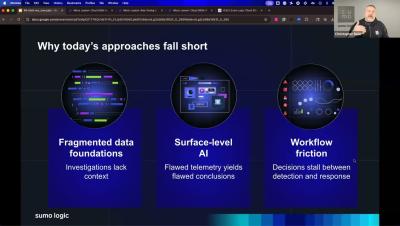
The SOC Analyst Agent: Bring an Agentic approach to work with your SOC team

For years, security teams have dealt with the challenges of alert fatigue, endless tools and data sources, and constant context switching. But, so far, we haven’t been able to significantly improve it with traditional tools. However, new agentic approaches can start providing improved gains. This begins to change the way SOC teams operate and approach managing their talent.

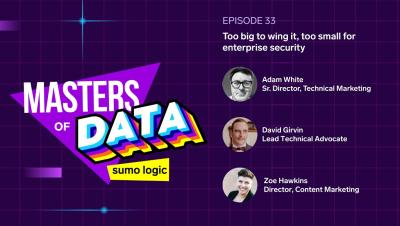
Ep 23: How to bootstrap your AppSec program

On this episode of Masters of Data, Adam sits down with Zoe Hawkins and David Girvin to talk AppSec programs that don't suck. David's hot take from his 1Password and Red Canary days? AppSec is a people problem, not a tooling problem—stop being the person devs dodge at standup. We cover the essentials: build relationships first, threat model based on actual business risk (not your anxiety), and ditch the "shift left" obsession with scanning everything. Instead, start with offensive testing that finds vulnerabilities attackers can actually exploit.

Questions to ask before vetting an AI agent for your SOC

So you’re ready to “hire” an agent or two for security operations. While AI agents won’t replace your human analysts, they are quickly becoming indispensable team members. Choosing the right ones should resemble a typical hiring process: you need to determine if they possess the necessary skills to fill your team’s gaps, work effectively with others, and grow with your organization. Here are five questions worth asking before you bring an AI agent on board in your SOC.

Platform enhancements strengthening security across every child org

Multi-org environments introduce complexity that most tools simply weren’t built for. Analysts are often forced to jump between different orgs, duplicate configuration work, and maintain parallel dashboards, alerts, and content–inefficiencies that increase risk, overhead, and time-to-response. Every minute spent managing infrastructure is one you’re not spending serving your clients or responding to threats.

Ep 21: How to start a threat program

In this Masters of Data episode, we welcome back Chas Clawson to discuss building effective threat hunting programs from the ground up. We explore the difference between proactive threat hunting and detection engineering, emphasizing how AI tools are making sophisticated security operations accessible to teams of any size. We cover practical approaches, such as prioritizing threats based on business risk, creating feedback loops between red and blue teams, and measuring success through meaningful metrics rather than vanity numbers.

Detecting SHA1-Hulud: the logs must flow

Sha1-Hulud has burrowed back into our lives, spreading rapidly and causing more destruction than ever. Named after the famous worm from the Dune franchise, this attack is also impacting global organizations. Since its first widescale spread on September 16, 2025, this worm has demonstrated its ability to propagate rapidly with high impact using the following techniques: This variant includes some new behavior, including.

Ep 19: The atomic habits of cybersecurity professionals

In this Masters of Data episode, we welcome back Zoe Hawkins and Roland Palmer to discuss building better security practices through small, incremental improvements personally and professionally. We emphasize regularly auditing security policies to avoid unnecessary friction that forces workarounds, treating security as sociology rather than just technology. We cover practical approaches like habit-stacking, weekly business reviews, staying informed about threats through intentional news consumption, and developing cognitive humility with security prompts.