Since 2019, Snyk and Dynatrace have partnered with a shared mission of securing the entire software development lifecycle (SDLC) and accelerating digital transformation. As many agile organizations migrate their workloads to the cloud, it’s tempting for teams to let security take a back-seat until all the pieces of the infrastructure puzzle are in place.
At Snyk we have some general points of principle that we use to help guide our security thinking and decision making. Firstly, it is always important to understand from whom we are protecting, as it has implications for how we need to act. As an example of this, if our artefact is a web server, then we need to protect it against untrusted users. Whilst if our artefact is encryption software, then we clearly need to protect it even from users with physical access to the system.
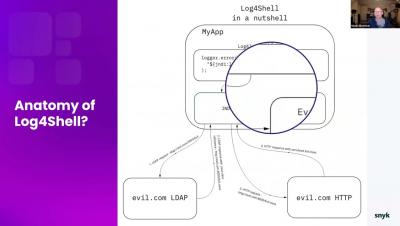
If you’re in tech at all, you’ve likely heard of the Log4Shell exploit taking over the Intertubes. If you’re not a Java developer (or developer of any sort), you may be left scratching your head as to just what’s going on. This post is split into two parts: an explanation of Log4Shell for non-developers and an overview of the Log4Shell vulnerability for non-Java developers.