At Snyk we have some general points of principle that we use to help guide our security thinking and decision making. Firstly, it is always important to understand from whom we are protecting, as it has implications for how we need to act. As an example of this, if our artefact is a web server, then we need to protect it against untrusted users. Whilst if our artefact is encryption software, then we clearly need to protect it even from users with physical access to the system.
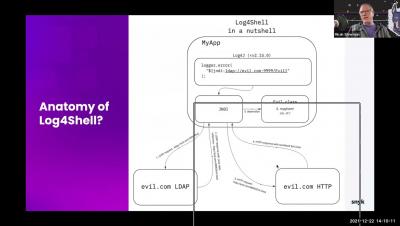
If you’re in tech at all, you’ve likely heard of the Log4Shell exploit taking over the Intertubes. If you’re not a Java developer (or developer of any sort), you may be left scratching your head as to just what’s going on. This post is split into two parts: an explanation of Log4Shell for non-developers and an overview of the Log4Shell vulnerability for non-Java developers.
Speak with any customer in tech and the word Kubernetes will surely find its way into the conversation at some point or another. In terms of orchestration, automating deployments, scaling, managing containerized applications to meet growing customer demand, Kubernetes provides users with extensibility and flexibility.
Even if you tried VERY hard to enjoy a quiet weekend, chances are that this plan was interrupted at least once by the new Log4Shell zero-day vulnerability that was disclosed on Friday (December 10, 2021). The new vulnerability was found in the open source Java library log4j-core which is a component of one of the most popular Java logging frameworks, Log4J.