Security | Threat Detection | Cyberattacks | DevSecOps | Compliance

Cyber Essentials Changes April 2026 (Danzell) - What UK Organisations Need To Know For Certification Success

IASME has come up with a newer version of the Cyber Essentials scheme, introducing significant changes to Cyber Essentials from April 2026. These updates are designed to address evolving cyber threats and ensure the scheme remains robust and relevant. This article addresses the changes you must know, timelines, preparations required, and how you can start this process proactively.

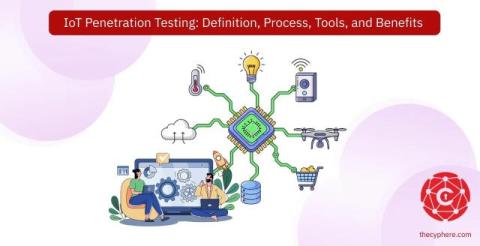
IoT Penetration Testing: Definition, Process, Tools, and Benefits

IoT penetration testing is a security assessment of the complete IoT ecosystem, from backend systems and cloud services to mobile devices and hardware. It involves a multi-stage simulated attack on IoT devices and their supporting system to identify security risks before attackers can exploit them. Unpatched firmware is responsible for 60% of IoT security breaches, according to the IoT Security Foundation.

Web Application Firewall (WAF) Best Practices For Optimal Security

Web and mobile application code protection is a must-have security control. Modern solutions such as application layer firewall help your organisation to keep those assets protected from threats like SQL injection, cross-site scripting and bot-driven attacks. This is where a Web Application Firewall (WAF) comes into the picture. A WAF has the capability of filtering, monitoring and blocking HTTP requests to protect the assets from malicious requests without affecting legitimate users.

Securing Against Attacks: How WAF Rate Limiting Works

Rate limiting plays a major role in application security, especially when it is about defending web applications from malicious bot attacks, credential stuffing, brute force attacks and excessive API calls. Rate limiting security ensures that systems function properly without overwhelming them. It controls the number of requests a client or a specific IP address can send over a specified time period.

Evolution and Growth: The History of Penetration Testing

The history of penetration testing begins with military strategies used to test enemy defenses. Over time, this evolved into a formal practice for identifying vulnerabilities in computer systems. This article traces the brief history of of penetration testing, from its early conceptual roots in military exercises, through the rise of ‘Tiger Teams’ in the 1970s, to the sophisticated tools and methodologies in use today.

CAF-aligned DSPT FAQs for NHS and Healthcare Organisations (2024-2025 and beyond)

Show your customers and supply chain you can manage application risks with secure coding practices. Assess yours before it’s too late. Box-ticking approach to penetration tests is long gone. We help you identify, analyse and remediate vulnerabilities so you don’t see the same pentest report next time.

Cyber Essentials NHS and Healthcare Organisations

Cyber Essentials scheme is a UK government-backed initiative designed to help organisations, large or small, shield themselves from common cyber threats. It outlines a straightforward set of technical security controls that, when appropriately implemented, can reduce an organisation’s attack surface. This is particularly vital for NHS and healthcare organisations. They handle NHS data that needs robust protection.

NCSC Cyber Assessment Framework (CAF)

Cyber incidents can result in catastrophic consequences. Cyber risks faced by public sector organisations need a plan. NCSC developed the cyber assessment framework (CAF) to help organisations achieve and demonstrate cyber resilience, specifically in, specifically by identifying the important functions at risk of disruption due to cyber incidents.

PCI DSS 4.0.1: What Changed & What's Not?

As threats evolve with every new technology, security must evolve, too. When it comes to payment data, the Payment Card Industry Data Security Standard (PCI DSS) covers the payment card industry. PCI DSS v4.0.1 contains some typographical errors and added guidance to improve the security controls while maintaining the core of the previous version.

What is PCI DSS 4.0: Is This Still Applicable For 2024?

In a time when cyber threats continuously evolve, a security standard or framework is essential for protecting digital assets. The Payment Card Industry Data Security Standard (PCI DSS), developed by the PCI Security Standards Council, empowers organisations to safeguard cardholder data globally. PCI DSS offers technical guidance and practical steps to effectively protect cardholder data and overall payment infrastructure.