Security | Threat Detection | Cyberattacks | DevSecOps | Compliance

The Latest Cybersecurity News & Insights From Around The World

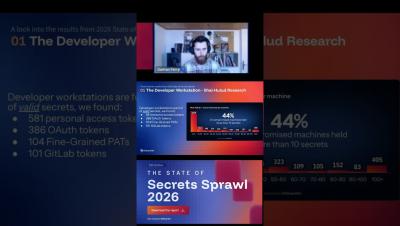


Designing Identity for the Agentic Enterprise: The Okta AI Identity Summit
Speakers made it clear that agentic AI is already operating across enterprise workflows. Learn why identity must govern ownership, permissions, actions, and accountability.


GitGuardian's Smarter Search Bar Makes Incident Triage Faster
GitGuardian’s improved search bar helps teams cut down triage time by turning incident search into a single, faster workflow. Use it to safely search for matching secret values, audit incidents by author, find leaks in specific files, filter by source, and use AI Filters to ask for what you need in plain English. It is available now for all workspaces and for all plan levels. But you will need to activate AI Filters manually.
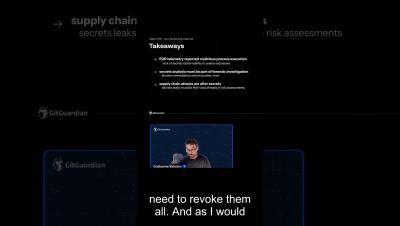

LLMs go around that security constraint and hardcode secrets
If the LLM hits a security constraint that’s in the way of delivering what you asked for, it will silently fail. It will go around that security constraint and hardcode secrets.

Four Credential-Harvesting Campaigns Hit Open Source Ecosystems in Two Weeks
The pace is not slowing down. Between May 18 and June 1, 2026, four distinct supply chain campaigns swept through npm, PyPI, Crates.io, GitHub Actions, and Composer.

How We Migrated the Heart of Our Platform to Rust
By rewriting our secret detection engine in Rust, we made our engine more than three times as fast. But not without making it four times slower along the way.

GitGuardian's VS Code Extension Just Made It Even Easier To Fight Secrets Sprawl
We are excited to announce the release of the GitGuardian Visual Studio Code Extension version 0.23.0! Aside from updating the tool to use the latest version of ggshield, it now can show all findings in a convenient list view int he primary sidebar.