Network segmentation is almost as old as computer networking. The evolution of network segmentation went through switches to routers and firewalls, and as modern networks evolved, the ability to better control traffic by operating system native functionality evolved as well. Native controls like IP Tables became lingua franca, alongside access control lists, process isolations, and more. Native controls are not a new concept.
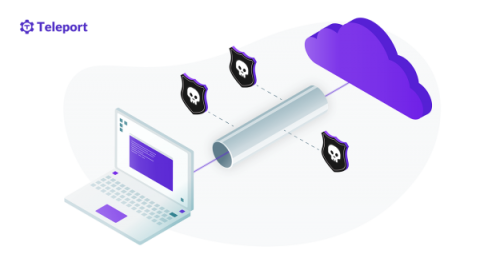
Co-authored by James Robinson and Jeff Kessler As rapidly as wide-area networking (WAN) and remote access strategies with associated technologies are changing, we’re always surprised by the amount of time some security professionals and auditors dedicate to the either/or debate between split tunnel and full tunnel connectivity.
The events of 2020 helped to accelerate the convergence between information technology (IT) and operational technology (OT) for many organizations. As reported by Help Net Security, for instance, two-thirds of IT and OT security professionals said in a 2020 survey that their IT and OT networks had become more interconnected in the wake of the pandemic.
The security landscape is always changing. New features are coming out all the time, but often backward compatibility is maintained too. What this means is that while the new features may be present and active by default, it's possible for users to be completely unaware of them and continue using the legacy functionality.
Cyber attacks come in many forms, but they almost always share one trait in common: they are carried out over the network. Although there are exceptions, the network is usually the entry point that attackers use to launch whichever exploits, data thefts, or other intrusions they aim to impose upon a business.