Security | Threat Detection | Cyberattacks | DevSecOps | Compliance

Fuzzing and Bypassing the AWS WAF

The Sysdig Threat Research Team discovered techniques that allowed the AWS WAF to be bypassed using a specialized DOM event. Web Application Firewalls (WAFs) serve as the first line of defense for your web applications, acting as a filter between your application and incoming web traffic to protect against unauthorized or malicious activity. In this blog post, we will analyze one of the most commonly used Web Application Firewalls, the AWS WAF, and explain ways that allowed it to be bypassed.

Calico Egress Gateway: How to provide a stable public network identity for EKS workloads to securely connect with approved SaaS

Many organizations have adopted IP address allowlisting for their corporate cloud applications as an added layer of security. Many sanctioned cloud applications and web services enforce access restrictions based on the source IP address of incoming traffic. To establish a connection with these remote SaaS services, your traffic must originate from a particular IP address that is pre-registered. Any traffic originating from different IP addresses will be denied access by these remote applications.

Don't get hacked! Apply the right vulnerability metrics to Kubernetes scans

This is not a beginner’s blog post. As such, we will not tell you about the importance of securing your Kubernetes infrastructure (it’s important). However, if you are here to learn about increasing the efficiency of your security work and the blind spots you may have, you have come to the right place. You may have heard of and are already using CVSS as your gold standard for vulnerability prioritization.

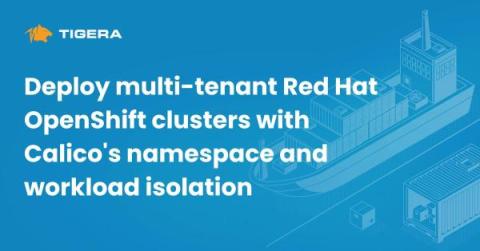
Deploy multi-tenant Red Hat OpenShift clusters with Calico's namespace and workload isolation

As you are using OpenShift or are planning to use it for your containerized applications, ensuring robust security is crucial. As you dive deeper and your workloads become more complex, the need for advanced security measures becomes apparent. This is where Calico’s microsegmentation capability helps to achieve tenant and workload isolation. Let’s explore how Calico can be a game-changer in strengthening the security posture of your OpenShift environment.

Why should developers care about container security?

Container scanning tools, industry publications, and application security experts are constantly telling us about best practices for how to build our images and run our containers. Often these non-functional requirements seem abstract and are not described well enough for those of us that don’t have an appsec background to fully understand why they are important.

Detect unknown network threats with Calico Cloud Honeypods

Based on the well-known cybersecurity method, “honeypots”, Calico Cloud runtime security approach of Honeypods as decoy pods are designed to attract traffic to them from malicious sources and to detect suspicious activity within a Kubernetes cluster.

2023 Kubernetes vulnerabilities roundup

Transparency in vulnerability disclosure plays a crucial role in effective risk management, regardless of software development models. The Common Vulnerabilities and Exposures (CVE) database serves as a valuable resource, offering insights into known weaknesses even when fixes are unavailable. This empowers organizations to make informed decisions about prioritizing mitigation strategies and protecting their systems.