Data leaks occur when sensitive data is unintentionally exposed from within an organization. Data leaks can refer to both the leakage of digital data, meaning anything that can be transmitted through the internet, as well as physical data, such as USB drives. Continue reading to learn how data leaks happen, how serious they can be and how to prevent them from occurring.
In the modern software ecosystem, containerization has become a popular method for packaging and deploying applications. Alongside this growing trend, ensuring the security of software supply chains has become a critical concern for businesses of all sizes. Implementing best practices, such as signing and verifying images to mitigate man-in-the-middle (MITM) attacks and validating their authenticity and freshness, play a pivotal role in safeguarding the integrity of the software supply chain.
Delta Dental of California is a major dental insurance provider throughout one of the largest states in the US. The company is well-known for offering PPO dental insurance policies and other varieties of dental insurance options. The company was founded in 1955 and serves millions of Americans throughout nearly all of the 50 states. All California residents using Delta Dental may have been impacted by a recent data breach that could cause real problems for them.
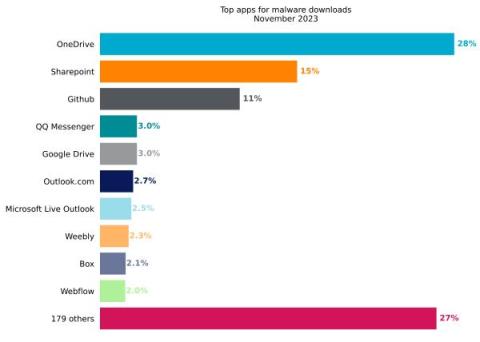
Adversaries are continuing to expand their attacks by adding tactics like domain abuse, multifactor authentication (MFA) fatigue and unique crafted exploit kits acquired from underground forums. Typosquatted domains pose a risk for any organization as they are used at the start of the attack chain, with the goal of misdirecting users to a look-alike site to steal their identities.
This is a follow up discussion of some advanced use case scenarios for Egress Gateways. In a previous blog post, Policy-based routing with Egress Gateways, I explained how to achieve connectivity to multiple destinations using policies based on the destination of the traffic. One of the use cases described was the ability of connecting to different services based on the destination, so we can use a different source IP that can be included in an allowlist for such services.
Two big trends are now converging that will change the way we view and implement software supply chain security and make dependency management a vital part of assuring security. Let’s look at why and how this is happening, and what it means for dependency management.
Third-party cyber risk is now one of the biggest threats today, according to many CISOs. Security leaders point to the fact that many of the recent major breaches have been a result of a single software supply chain vulnerability: SolarWinds, Log4j, and MOVEit, just to name a few.