Security | Threat Detection | Cyberattacks | DevSecOps | Compliance

What is Cybersecurity Compliance? List of Compliance Regulations by Industry

Cybersecurity compliance refers to the practice of adhering to laws, standards, and regulatory requirements established by governments and industry authorities. These compliance regulations are designed to protect a business’ digital information and information systems from cyber threats, including unauthorized access, use, disclosure, disruption, modification, or destruction.


Cyber Security Monitoring: 5 Key Components

Cyber security monitoring is the practice of continuously observing IT systems to detect cyber threats, data breaches, and other security issues. By helping to identify threats early, monitoring solutions can help to mitigate attacks faster and limit the damage they can do. Monitoring solutions may track activity on networks as well as endpoints like individual laptops, mobile phones, desktop computers, and IoT devices.

A 2025 Guide to SOX Compliance

The Sarbanes-Oxley Act (SOX), enacted in 2002, is a U.S. federal law established to enhance corporate governance and strengthen the accuracy and reliability of financial reporting for publicly traded companies. SOX aims to protect investors and the public by enforcing stringent reforms to improve financial disclosures and prevent corporate fraud.

The Future of Cyber Security Lies in Behavioural Analytics

Behavioural analytics in cyber security has emerged as a powerful tool for identifying and mitigating human risks. By focusing on how humans interact with systems, user behavioural analytics offer a proactive approach to threat detection, ensuring a more secure digital environment for businesses.

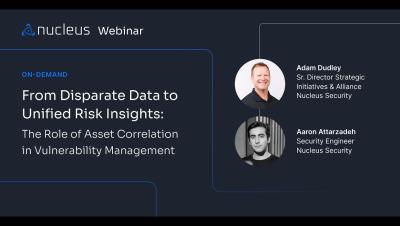
Disparate Data to Unified Risk Insights: The Role of Asset Correlation in Vulnerability Management

In this webinar, Adam Dudley and Aaron Attarzadeh from Nucleus discuss the critical role asset correlation plays in vulnerability management. They dive into how organizations can unify disparate asset data to gain clearer, more actionable risk insights. They explore the challenges of managing vulnerabilities in today's complex environments, with a focus on metadata integration, asset correlation, and how to manage data from multiple scanners and sources.

Unmasking Shadow AI: What Is it and How Can You Manage it?

Since the launch of ChatGPT in late 2022, gen AI (generative artificial intelligence) has transformed nearly every facet of our lives, including our professions and workplace environments. Adoption has been driven by employees looking for faster, better ways to perform. For example, applications like ChatGPT, DALL-E, and Jasper are helping employees across industries boost productivity, overcome roadblocks, and brainstorm creative solutions.

Operation Phantom Circuit: North Korea's Global Data Exfiltration Campaign

In December 2024, a routine software update concealed a global threat. Attackers from the Lazarus Group, based in North Korea, infiltrated trusted development tools, compromising hundreds of victims worldwide. This sophisticated campaign, code-named “Phantom Circuit,” targeted cryptocurrency and technology developers, employing advanced obfuscation techniques through proxy servers in Hasan, Russia.

The Life of Pi - Privacy Leaders and Their Everyday

In today’s data-driven economy, enterprises are under increasing pressure to manage privacy risks effectively. The responsibility of identifying and mitigating these risks often falls on lawyers and Chief Data Privacy Officers (CDPOs), who must navigate complex regulatory landscapes, safeguard sensitive data, and ensure their organizations maintain customer trust.