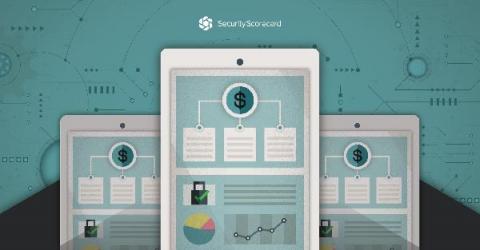
Cyber risk is defined as exposure to harm or loss resulting from data breaches or cyber attacks on information systems, information technology and information security. However, this definition must be broadened. A better, more encompassing definition is the risk of financial loss, disruption or reputational damage due to the failure of an organization's cybersecurity strategy.
In an age where businesses are relying more than ever on the rapid advancements in technology to drive innovation, strategy, growth and competitive advantage, it is clear the prevalence of technology is not slowing down. But the increase in new devices and systems that utilize connectivity, as well as the transition to the network of devices and systems that were traditionally air-gapped, brings with it an increased cybersecurity risk.
What do healthcare, banking, and the insurance industry all have in common? RISK! Regardless of industry, having an application, or system compromised could mean the exposure of extremely sensitive information. If such information became public knowledge your business could suffer tremendously. For many companies, a data breach is the worst possible situation imaginable. How does an organization work to reduce the impact of a system being compromised?
Third-party vendors are an important source of strategic advantage, cost savings and expertise. Yet outsourcing is not without cybersecurity risk. As organizations' reliance on third-parties grow, so too does their exposure to third-party risk and fourth-party risk. In fact, a recent HSB survey found nearly half of data breaches in 2017 were caused by a third-party vendor or contractor.
The calculus for disaster recovery and risk management is changing. Most small businesses within the past decade would often keep many of their critical technology assets locally, perhaps in a server closet, or a centralized data center for multiple offices. They built their own “vault” of applications, databases, email, files, etc., often on a few physical servers they would be wholly responsible for maintaining and eventually upgrading or replacing.
Vendor risk management (VRM) deals with the management and monitoring of risks resulting from third-party vendors and suppliers of information technology (IT) products and services. VRM programs are concerned with ensuring third-party products, IT vendors and service providers do not result in business disruption or financial and reputational damage.
As technology continues to pervade modern-day society, security and trust have become significant concerns. This is particularly due to the plethora of cyber attacks that target organizations, governments and society. The traditional approach to address such challenges has been to conduct cybersecurity risk assessments that seek to identify critical assets, the threats they face, the likelihood of a successful attack and the harm that may be caused.