Organizational cyber risk is notoriously difficult to quantify. Determining the impact of investments made by cyber security teams to reduce it is even tougher.
India's Securities and Exchange Board (SEBI) has introduced a new regulatory framework called the Cyber Security and Cyber Resilience Framework (CSCRF). The regulation aims to tighten cybersecurity and data governance for capital market participants. As cyber threats increase globally, the CSCRF is poised to create a stronger defense line for organizations operating in India’s capital markets.
A cybersecurity risk assessment, or cyber risk assessment, is a standardized process that organizations have established along with their implementation of cloud-based technologies to discover the accompanying vulnerabilities and threats. These assessments leverage the available, relevant data to identify the likelihood of various cybersecurity events occurring along with the potential impact should they come to fruition.
Now that AfterDarkMode malware is out there, internet threats are even more complicated and dangerous. That person who is sneaky and hard to catch has shown that they are motivated to get into systems and use weaknesses to their advantage. For businesses to be safe from the AfterDarkMode threat, they need to understand its plans, methods, and procedures and take steps to lower the risk. AfterDarkMode malware is a very advanced and sneaky threat that can take over computers without anyone noticing.
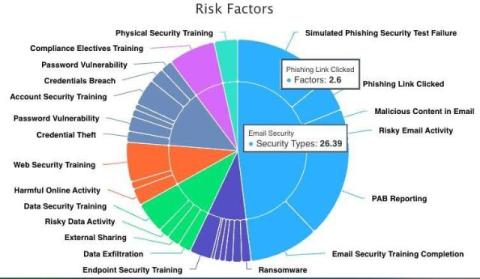
Depending on who you ask, between 70 and 90 percent of cyber risk has human error as the root cause. That's why Human Risk Management (HRM) is so important. And here is the next major advance in HRM. We're thrilled to announce the second version of our risk score architecture. It is so far advanced we have renamed—promoted really—our initial "Virtual Risk Officer" to SmartRisk Agent.
In high-security environments in sectors like defense, aerospace, or critical infrastructure, safety, and operations are intertwined with advanced technology. Intelligent robotics are at the forefront of this revolution, boosting the capability of these sectors to detect threats and mitigate risks with unprecedented accuracy and speed. In this article, we'll discuss a future where the protection of high-value assets is bolstered by human expertise and robotic systems that offer a new dimension of vigilance.
In September 2024, Frost & Sullivan released its Frost Radar: Application Security Posture Management (ASPM), 2024, highlighting the leaders in this rapidly growing market. We’re proud to be recognized as a top player, reflecting our strong growth and impact in the ASPM space. Our customers use Nucleus to achieve a comprehensive and unified application security posture.
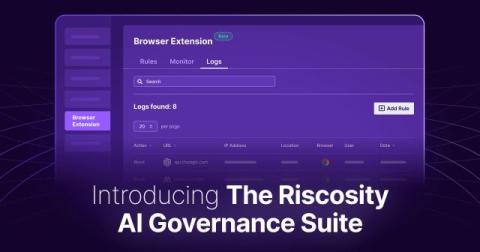
Clients can empower their employees to securely leverage any browser-based AI tool. The Riscosity browser extension will scan and block prompts with sensitive information in real time. Admins can use the intuitive Riscosity dashboard to set RBAC rules and keep a pulse on any AI tools being used – including any attempts to share sensitive information. The bottom line… we’re providing an AI firewall for your company, without the headaches of difficult deployment.
Managing risk is a part of life, whether it's in the personal, private, public, or professional spheres, but often, these various areas of vulnerability are addressed in isolation. In the corporate world, too, the various components of business risk were once tackled as mutually exclusive, with each departmental leader focusing on their sole area of expertise.
In today's digital world, cybersecurity is no longer just a concern for IT professionals-it's essential for everyone in an organisation, from top executives to entry-level employees. The main reason for this is that humans are often the weakest link in security, but they can also become the strongest defence if properly trained. That's why businesses need to prioritise cybersecurity education for all staff members.