Security | Threat Detection | Cyberattacks | DevSecOps | Compliance

Beyond PCI and HIPAA: How Feroot Powers Digital Operational Resilience Act (DORA) Compliance

If you’re in financial services—or provide technology services to banks, insurers, or fintechs—the answer is almost certainly yes. DORA, which takes effect in January 2025, creates a harmonized EU-wide regulatory framework to ensure that financial institutions and their vendors can withstand cyberattacks and technology disruptions.

Beyond PCI and HIPAA: How Feroot Powers Personal Information Protection and Electronic Documents Act (PIPEDA) Compliance

If your organization collects personal information from Canadian residents—whether through e-commerce websites, SaaS applications, or marketing platforms—PIPEDA likely applies to you. The challenge? PIPEDA’s principles-based framework is intentionally broad, making it difficult for organizations to know where they stand. One of the most overlooked areas of compliance is the client-side of web applications, where third-party scripts, pixels, and tag managers quietly handle customer data.

PCI SSF Compliance Explained: Infographic for Payment Software Vendors

In today’s rapidly evolving digital payment landscape, software security is no longer just a best practice—it’s a necessity. The PCI Software Security Framework (PCI SSF) sets the global benchmark for safeguarding payment applications and ensuring they are developed with security at the core. Whether you’re creating payment gateways, POS applications, or mobile payment apps, compliance with PCI SSF demonstrates that your software meets stringent security requirements.

Beyond PCI and HIPAA: How Feroot Powers General Data Protection Regulation (GDPR) Compliance

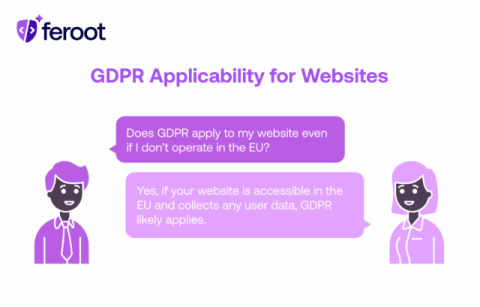
Yes. If your website is accessible in the EU and collects any user data—through forms, cookies, session recordings, pixels, or embedded scripts—then GDPR likely applies. But compliance isn’t as simple as publishing a privacy policy or showing a cookie banner. Modern web apps expose personal data through invisible front-end technologies like third-party JavaScript, ad tags, tag managers, and behavioral trackers.

Intergrating Secure Lifecycle into DevOps for PCI DSS Compliance

SLC refers to the entire process of developing and maintaining software, encompassing various stages like planning, design, development, testing, deployment, and maintenance. The average cost of a data breach in the financial sector is approximately $5.85 million. Incorporating security into DevOps can significantly reduce these costs by preventing breaches early. Around 73% of organizations have adopted DevSecOps practices to embed security into their DevOps pipelines.

Set It and Forget It: How Feroot's PaymentGuard AI Automates PCI 6.4.3 & 11.6.1 With Zero Dev Effort

Compliance effort often comes from manual spreadsheets, one-off audits, and error-prone documentation processes. Requirements like PCI DSS 6.4.3 (script inventory and justification) and 11.6.1 (tamper detection and alerts) demand continuous monitoring — something legacy tools and manual processes struggle to provide. Legacy CSP and manual reviews are inadequate against modern threats such as Magecart attacks and dynamic script injections, increasing risk and operational cost.

What Is PCI DSS and How Can Organizations Best Maintain Compliance?

The world is going cashless. The Federal Reserve reported that cash was used in just 16% of all U.S. transactions in 2024. And that number is expected to continue to decline. The widespread use of credit and debit cards, plus the rise of digital wallets and contactless payments, have reshaped the financial landscape, increasing flexibility as well as financial protection. However, it’s also increased the levels of fraud.

Network Segmentation Testing for PCI DSS: A Practical Guide

PCI DSS compliance isn’t just about ticking off controls, but it’s more about how your infrastructure is architected and enforced. Few decisions influence the scope of compliance as directly as the implementation of network segmentation. Every additional system brought into the PCI scope adds operational friction: more logs to review, more systems to harden, more controls to audit. One misconfigured firewall rule or a forgotten DNS server can quietly pull half your network into scope.