Security | Threat Detection | Cyberattacks | DevSecOps | Compliance

Security configurations-Part one: 7 reasons why security configurations are crucial to your security blueprint

Security configurations are security-specific settings used to secure heterogeneous endpoints such as servers, desktops, laptops, mobile devices, and tablets. As endpoints in your network diversify, securing each endpoint becomes a challenge. One way to ensure effective endpoint security is by automating it, which is where security configurations come into play. Security configurations are utilized to secure and control every facet of your network.

Now Is the Time to Get up to Speed with CMMC and SP 800-171 Rev 2

At the beginning of March 2020, Fifth Domain reported that Colorado-based aerospace, automotive and industrial parts manufacturer Visser Precision LLC had suffered a DoppelPaymer ransomware infection. Those behind this attack ultimately published information stolen from some of Visser’s customers. Those organizations included defense contractors Lockheed Martin, General Dynamics, Boeing and SpaceX.

All you need to know about NIST password guidelines

The National Institute of Standards and Technology (NIST), a physical sciences laboratory and a non-regulatory agency of the United States Department of Commerce, recently released their guidelines for password security. Some of them are contrary to what we’ve come to believe are good password policies. Our IT security expert will talk more about these guidelines in our upcoming webinar. Let’s take a look at what some of them are.

How to Leverage NIST Cybersecurity Framework for Data Integrity

Together with the National Cybersecurity Center of Excellence (NCCoE), the National Institute of Standards and Technology (NIST) has released a series of practice guides that focuses on data integrity: the property that data has not been altered in an unauthorized manner. Tripwire is very proud to have contributed and collaborated with other technology vendors in the development of these practice guides.

The War of Passwords: Compliance vs NIST

The most recent National Institute of Standards and Technology (NIST) guidelines have been updated for passwords in section 800-63B. The document no longer recommends combinations of capital letters, lower case letters, numbers and special characters. Yet most companies and systems still mandate these complexity requirements for passwords. What gives?

Privileged Password Policy Compliance Overview: NIST 800-63, HIPAA, PCI DSS, GDPR

Privileged passwords should be used wisely. These credentials, also called secrets, provide a user with access to protected accounts, systems, networking hardware, cloud instances, and applications. Since privileged accounts also have elevated permissions, passwords to these accounts are often targeted by cybercriminals. In fact, weak, reused, and compromised passwords are the cause of 81% of all data breaches according to the Verizon 2019 Data Breach Investigations Report.

What is NIST SP 800-171? Tips for NIST SP 800-171 Compliance

NIST Special Publication 800-171, Protecting Controlled Unclassified Information in Nonfederal Systems and Organizations (NIST SP 800-171 or NIST 800-171), provides federal agencies with a set of guidelines designed to ensure that Controlled Unclassified Information (CUI) remains confidential and unchanged in nonfederal systems and organizations.

What is NIST SP 800-53? Tips for NIST SP 800-53 Compliance

NIST Special Publication 800-53, Recommended Security Controls for Federal Information Systems and Organizations (NIST SP 800-53 or NIST 800-53), establishes an information security standard for the federal government. Specifically, NIST 800-53 establishes security controls and privacy controls for federal information systems and organizations excluding those involved with national security.

What is the NIST Cybersecurity Framework?

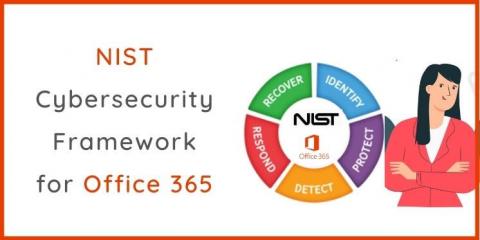
The NIST Cybersecurity Framework provides a framework, based on existing standards, guidelines and practices for private sector organizations in the United States to better manage and reduce cybersecurity risk. In addition to helping organizations prevent, detect and respond to cyber threats and cyber attacks, it was designed to improve cybersecurity and risk management communications among internal and external stakeholders. The framework is increasingly adopted as best practice, with 30% of U.S.

What Is NIST's Cybersecurity Framework Manufacturing Profile?

Executive Order 13636, “Improving Critical Infrastructure Cybersecurity,” directed the development of the voluntary Cybersecurity Framework that provides a prioritized, flexible, repeatable, performance-based and cost-effective approach to manage cybersecurity risk for those processes, information and systems directly involved in the delivery of critical infrastructure services.