In the digital age, organizations and the missions and business processes they support rely on information technology and information systems to achieve their mission and business objectives. Not only is technology used to efficiently enable businesses to carry out operational activities, but it is also the backbone for the United States’ critical infrastructure.
Over the last few years, the idea of patching systems to correct flaws has graduated from an annoying business disruption to a top priority. With all of the notorious vulnerabilities that can wreak total havoc, the time it takes to patch becomes a minor inconvenience when weighed against both the technical challenges and possible regulatory penalties of not patching.
As an infosec professional, you’ve likely heard of the National Institute of Standards and Technology (NIST).
Since NIST Cybersecurity Framework is the best solution for better prevention, detection, and response to cybersecurity incidents, various organizations have adopted it to safeguard their IT assets. The 2019 SANS OT/ICS Cybersecurity Survey spells out the NIST CSF as the number one cybersecurity framework in use today. However, it is imperative to consider that how should we comply with NIST CSF in 2020 and beyond? Here is some help!
In this blog, we will cover the various requirements you need to meet to achieve NIST 800-53 compliance, as well as how Sysdig Secure can help you continuously validate NIST 800-53 requirements for containers and Kubernetes.
“Doubt is an unpleasant condition, but certainty is an absurd one.” Whilst I claim no particular knowledge of the eighteenth-century philosopher Voltaire, the quote above (which I admit to randomly stumbling upon in a completely unrelated book) stuck in my mind as a fitting way to consider the shift from traditional, perimeter-focused ’network security’ thinking to that of ‘ZTA’ (Zero Trust Architecture.)
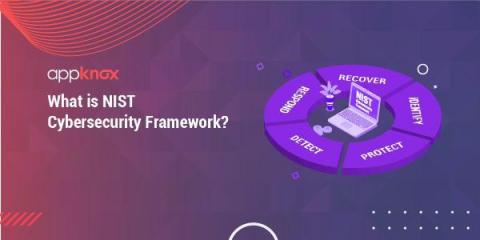
The Cybersecurity Framework (CSF) was developed by the National Institute of Standards and Technology (NIST), a division of the U.S. Department of Commerce. This framework was created through collaboration between various private-sector and government experts to provide high-level taxonomy of cybersecurity outcomes and a methodology to assess and manage those outcomes.
In September 2019, the National Cybersecurity Center of Excellence (NCCoE) at the National Institute of Standards and Technology (NIST) announced the release of a draft practice guide entitled, “NIST Special Publication (SP) 1800-23: Energy Sector Asset Management.” The NCCoE spent the next two months collecting comments from the public to improve their guide. They then used this feedback to improve upon their initial draft. But the wait is finally over.