Security | Threat Detection | Cyberattacks | DevSecOps | Compliance

Stop Destructive AI Agent Commands Before They Run | Cato AI Security

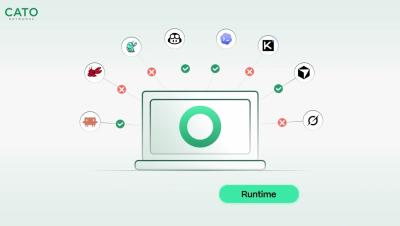
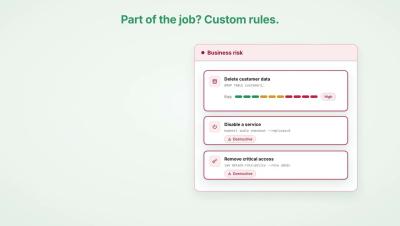
Coding agents now have real access to cloud resources, code repositories and identity systems. That access brings a new kind of risk: a single unclear request, or an attacker who takes over the agent, can trigger actions that are hard or impossible to undo. That’s why Cato now detects destructive commands before they execute.

Cato Engine Playground: Test Your AI Detectors Before Production

You've written your AI policies. Now prove they work before you publish them. Security teams build detectors to enforce their AI policies, and they need to see how those detectors behave before they go live. Too strict, and they block work that should go through. Too lenient, and nothing gets caught. The Engine Playground in the Cato Management Application lets security teams test detectors before they go into production.

Cato AI Security: Three Questions to Answer About AI in Your Organization

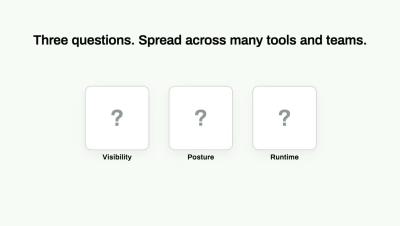
Do you know how AI is used in your organization right now? Cato AI Security helps you answer. AI is in the hands of employees, inside the applications teams build, and running as agents. That leaves security teams with three questions, spread across many tools and teams: which AI is in use, is it set up safely, and can you stop a threat inline? Cato AI Security answers all three on one platform: Cato AI Labs research finds AI-native attacks in the enterprise tools employees already use.

Cato DEM Root Cause Analysis: Find What's Slowing Down Your Applications

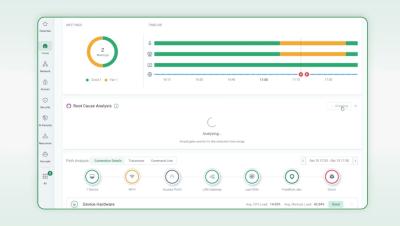
When users report slow application performance, where do you start troubleshooting? The Wi-Fi, ISP, network, or application itself? With Cato Digital Experience Monitoring (DEM), IT teams can move beyond guesswork and identify the root cause of performance issues using evidence from across the user-to-application path. In this demo, a user reports slow Zoom performance at a branch location. Watch how Cato DEM Root Cause Analysis investigates the issue, examines latency, jitter, and packet loss, and identifies the branch wireless LAN as the source of the slowdown. See how Cato DEM helps IT teams.

Cato AI Red Teaming: Find AI Model Risks Before Attackers Do

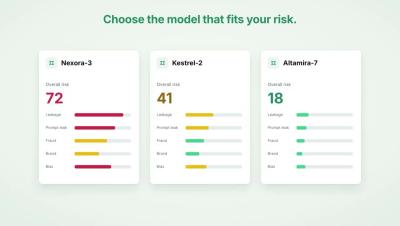
AI-powered applications depend on the models behind them, and those models keep changing. New attack techniques appear every day, model updates can change how safeguards behave, and switching models can leave existing protections behind. Security teams need to know where their AI is exposed before an attacker finds out first.

Cato SMB FlexPool: Scale Managed SASE with Less Friction

As an SMB managed SASE business grows, the real challenge is often operational: how to add customers and respond to changing needs without adding licensing friction. Cato SMB FlexPool helps eligible MSPs and service providers managed committed capacity at the partner level, supporting faster growth, better utilization, and control of the managed service experience. Contact your Cato channel representative to discuss SMB FlexPool eligibility and pool sizing.

Agentic Attacks Require Agentic Threat Prevention

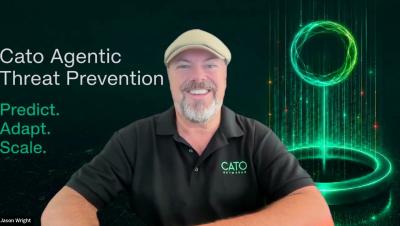
AI-powered attacks are moving faster, adapting in seconds, and overwhelming traditional defenses with machine-speed activity. In this video, Jason Wright explains why security teams need Agentic Threat Defense built on customized predictions, automatic adaptation, and cloud-native scale. Watch how Cato Agentic Threat Prevention helps reduce the risk of AI-powered threats, stop adaptive attacks earlier, and scale prevention to stop agentic attacks.

Defending at machine speed: Predict, Adapt, Stop Agentic Attacks

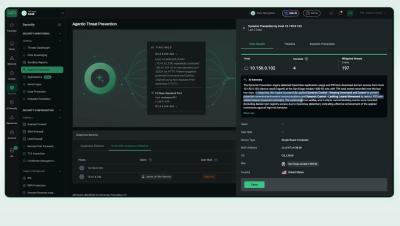
AI-powered adversaries are accelerating vulnerability discovery and automating attacks. For security teams, the challenge is adaptive attack chains, machine-speed execution, and attack volumes beyond manual workflows. Cato is redefining prevention in the AI era—predicting enterprise-specific attack paths, adapting protections at machine speed, and scaling defense with cloud-native scale. This means enterprises can do more than just react to attacks, they can prevent them.