Security | Threat Detection | Cyberattacks | DevSecOps | Compliance

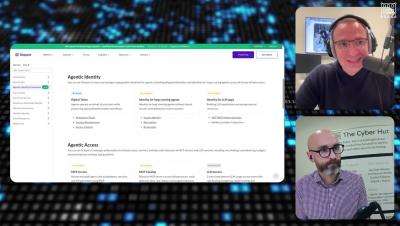
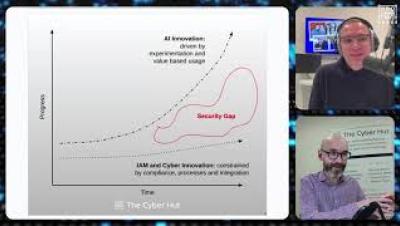
AI Impact on Cybersecurity: The Gap | Teleport x The Cyber Hut

The complexity of computing has always grown faster than business itself. AI is accelerating that divergence — and smaller organizations are feeling it now. Ev Kontsevoy and Simon Moffatt (The Cyber Hut) on the security gap, the cascading identity problem, and why this used to be a hyperscaler issue.

Access Your OpenClaw Web UI from Anywhere with Teleport

OpenClaw’s web UI gives you full control over your personal AI agent, but exposing it publicly creates significant risk. In this video, I show how to securely access the OpenClaw web interface from anywhere using Teleport, without opening inbound ports or relying on public instances. You’ll see how to put the OpenClaw UI behind identity-based access, approve devices, and keep full admin control while staying locked down.

Why Agentic AI Breaks Legacy Identity - and What Infrastructure Leaders Must Do Next

Agentic AI is fundamentally changing how software operates, and in doing so, it breaks the identity and access models that many organizations still rely on. Unlike traditional applications, agentic systems are non-deterministic, long-running, and capable of autonomous decision-making across infrastructure, data, and production services. These systems do not fit within legacy identity assumptions built for humans, static workloads, perimeter controls, or long-lived credentials.

The term "AI Agent" is failing us. #cybersecurity #ai #technews

The term "AI Agent" is failing us. In Prediction, Ev warns that our vocabulary is lagging behind the technology. Calling everything an "AI Agent" is like calling everything "software." It’s too broad to be useful. A browser plugin has a completely different architecture than a microservice or a factory robot. They have different identities, different risks, and different security needs. You can't secure what you can't specifically identify.