Security | Threat Detection | Cyberattacks | DevSecOps | Compliance

CMMC 2.0: Jumpstart FCI & CUI Protection with Data-centric Zero Trust

Government, defense and defense industry base (DIB) must meet the demands of both the DoD and the critical infrastructure players and map to critical controls laid out in NIST 800-171, NIST 800-53, and the upcoming CMMC 2.0 to adequately protect Federal Contract Information (FCI) and Controlled Unclassified Information (CUI).

Building Dynamic Information Barriers in Microsoft 365

Information barriers that were once relegated to financial services and regulatory compliance are quickly becoming a must have to accommodate a variety of business scenarios. The art of running a business is a forever evolving path of goldmines and hurdles. Trying to map these business processes over current technology, is challenging at best and extremely difficult to achieve for all elements and viewpoints of business workflows.

Protecting secrets throughout the SDLC with SpectralOps

For developers, secret and credential leakage is a problem as old as public-facing repositories. Unfortunately, in 2021 it is officially a significant risk. One that is easy to ignore until it is too late. In a rush to deliver, developers will often hard-code credentials in code or neglect to review code for exposed secrets. The results can be embarrassing, at best - but devastatingly costly in other cases.

DevSecOps Cloud Security Solutions Buyer's Guide

The cloud has come a long way from Eric Schmidt's "modern" coining of the phrase in 2006. Today, companies and institutions are reliant upon a cloud infrastructure to run their day-to-day operations. This reliance and growth have also transformed the threat landscape and your cybersecurity requirements along with it. Though cloud service providers are working ceaselessly to shore up vulnerabilities and bolster defenses, the responsibility for your cloud assets does not solely lie with them. Estimates predict that by 2025, 99% of cloud failures will be caused by the customer.

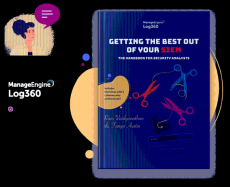
Getting the best out of your SIEM

An effective SIEM solution ingests logs from different network sources to give visibility into user and host activities. It uses capabilities such as threat intelligence and behavioral analysis to set correlation rules to spot malicious activities within a network. This e-book will help you obtain the maximum value from your SIEM deployment by guiding you through 10 of the most critical capabilities capabilities.

Mind the gap: The state of secrets scanning in 2021

Consuming secrets is a cornerstone for connectivity between applications and infrastructure. Whether it be cloud identity-based secrets such as IAM role keys from AWS, or FTP accessibility credentials - secrets such as these are often discovered by malicious users. The common culprit is usually in a public space such as public repositories on GitHub. While it's easy to think "that will never happen to us", it only takes one misplaced key pushed to the wrong repository for your entire infrastructure, application, and databases to be compromised and exposed.

The DevOps Guide To Vulnerability Management Tools In 2021

Imagine you are in charge of maintaining data for some of the most secretive government offices and powerful business entities globally. You have a significant investment in your security apparatuses protecting that knowledge. For years you haven't had a single blip or incident to cause any suspicion. Then the unthinkable happens, and from a single weak point, your entire network is compromised by malicious code hidden in an innocuous update.

Boost Your Information Security to Meet ITAR Compliance

The U.S. Government requires all manufacturers, importers, exporters, and brokers of defence articles, defence services or related technical information to meet International Traffic in Arms Regulations (ITAR) compliance. Applying these regulations to your business and to those within the greater supply chain introduces additional costs, rigor, and complexity into your processes. This whitepaper introduces 5 essential checkpoints of ITAR and provides strategies to assist with compliance and cyber resilience.