Security | Threat Detection | Cyberattacks | DevSecOps | Compliance

How Robotic Data Automation Fabric (RDAF) Could Automate Data Pipelines

AI has certainly become the hallmark of digital transformation strategy. According to IDC, global AI spending is forecasted to reach $500 billion in 2024 with a CAGR of 17.5%. Likewise, Gartner predicts low-code application platforms (LCAP), robotic process automation (RPA) and AI are fueling the growth for hyperautomation, and the market will reach $596 billion in 2022, up nearly 24%.

IPFS: The New Hotbed of Phishing

A few months ago, we reported on an interesting site called the Chameleon Phishing Page. These websites have the capability to change their background and logo depending on the user’s domain. The phishing site is stored in IPFS (InterPlanetary File System) and after reviewing the URLs used by the attacker, we noticed an increasing number of phishing emails containing IPFS URLs as their payload.

Thinking about hiring a cybersecurity partner? Keep these considerations in mind

Threats are becoming more sophisticated and the cybersecurity challenges organizations face are growing. Today, one of the biggest risks is hybrid work. According to a Canalys report, 134 million employees worldwide work remotely or under a hybrid model. As we addressed in our Cybersecurity Insights, extending beyond the company office perimeter makes protection a much greater challenge.

Transform Your Hybrid Work Model with SASE

The COVID-19 pandemic has indelibly changed the way we all work. As the world has opened back up and organizations have begun making the return to the office, many employees still want a hybrid work model. In an ideal hybrid working model, employees feel empowered and more productive given the freedom to do their work from any location or device, whenever it’s most convenient. Users need fast, secure access to their data, regardless of where their applications are located.

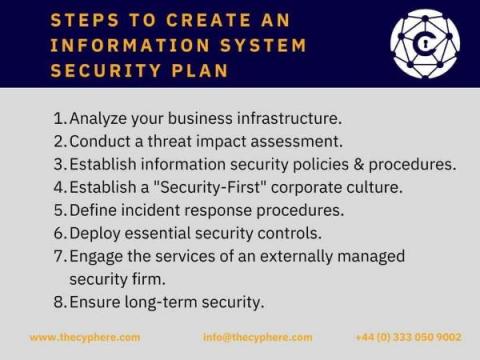
How to Establish Effective Information System Security Plans

Information ecosystems in the modern era are extremely complicated. Large amounts of data must be sent quickly and securely among thousands of networks’ applications, databases, and servers. That data, particularly sensitive information, should be protected at all costs against potential security incidents.

CIS Implementation Group 1 (IG1): Essential Cyber Hygiene

Cybercrime has become more prevalent since the start of the COVID-19 pandemic. Indeed, 81% of organizations worldwide experienced an uptick in cyber threats and 79% suffered downtime due to cyberattacks during peak season, according to a 2021 report by McAfee Enterprise and FireEye. Attacks have also become more complex. IBM and the Ponemon Institute report that the average time to spot and contain a data breach in 2021 was 287 days, a week longer than in 2020.

Nightfall vs. Netskope: Looking for a Netskope Alternative?

Ransomware, phishing, and malware are persistent and ever-evolving threats that today’s remote workspaces need to consider. The shift to a remote-first office, which for many has become permanent, has meant that companies need to be better equipped to protect their data in the cloud. Today, more than 45% of malware is delivered via the cloud.

How intelligent are AI tea-making robots?

When it comes to how truly intelligent Artificial Intelligence (AI) is, it’s a polarizing debate. Either AI will solve the world’s woes or robots will rule us all – Matrix-style. But it’s all a little more complicated than Hollywood makes it seem… For a deep dive, do listen to our Beyond the Data podcast hosted by Sophie Chase-Borthwick (Calligo’s Global Data & Governance Lead) and Tessa Jones (VP of Data Science Research & Development).

Automating Azure Files Restore in Azure Kubernetes Service

If you are considering Azure Files as the persistent storage for your Azure Kubernetes Service (AKS) applications, there are important considerations around AKS backup and recovery with implications on how you can perform Dev, Test, and Staging. This article outlines these data management considerations in detail and how to work around Azure Files limitation to achieve feature parity with using Azure Managed Disks.