Security | Threat Detection | Cyberattacks | DevSecOps | Compliance

Case study: Calico enables HanseMerkur to reduce infrastructure overhead and achieve ISO 27001 compliance

Established in 1875, HanseMerkur is one of the oldest private health insurance companies in Germany, with customers across Europe. The company ran multi-tenant clusters on premises with Kubespray, with around 150 internal software developers as users. As the company must handle personal information and confidential data, it adheres to ISO 27001, the German equivalent of SOC 2, as per industry standards.

ICS attack classifications: differentiating between Cyberwarfare, Cyberterrorism, & Hacktivism

Every news article about a threat group or attack floods the reader with classifications: nation-state groups, hacktivists, cyberterrorists, etc. But how can we define who is what? How can we differentiate between said categories? How should we deal with potential classification overlaps? Especially in the ever-evolving cyberwarfare realm, how can we approach these closely rooted phenomena?

Does ChatGPT Know Your Secrets? Threats and Benefits of AI in Your Environment

ChatGPT has been taking the World by storm, but it’s bringing with it issues around cybersecurity, data protection, and data privacy. IT leaders and business leaders are looking to create policies that will help protect their people and corporate assets, but so few people really understand the technology well enough to grasp and weigh the benefits, the concerns, and implications for the cybersecurity industry, in general.

New Survey Shows 40% of People Searching for a Job Encountered a Scam

A survey by PasswordManager.com has found that one in three job seekers has fallen for, and responded to, fake job scams over the past two years. “Nearly 4 in 10 respondents, all of whom have searched for a job within the last two years, say they’ve encountered job postings that turned out to be a scam,” the researchers write.

UK Attacker Responsible for a Literal "Man-in-the-Middle" Ransomware Attack is Finally Brought to Justice

The recent conviction of a U.K. man for cyber crimes committed in 2018 brings to light a cyber attack where this attacker manually performed the “in-the-middle” part of an attack. We’ve all heard of a “Man-in-the-Middle” (MitM) attack – also more recently called a “Manipulator-in-the-Middle” attack.

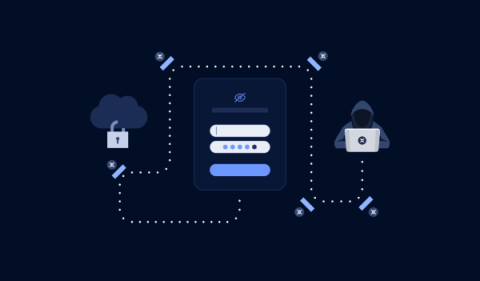
Breakdown of an Impersonation Attack: Using IPFS and Personalization to Improve Attack Success

Details from a simple impersonation phishing attack show how well thought out these attacks really are in order to heighten their ability to fool victims and harvest credentials. Credential harvesting scams are pretty simple at face value: send an email that links to a spoofed login page/website, and let the credentials roll on in.

What is NFV

In today's fast-paced digital landscape, businesses proactively seek innovative ways to optimize their networks, enhance operational efficiency, and reduce costs. Network Functions Virtualization (NFV) emerges as a transformative technology that leads the charge. NFV revolutionizes traditional, hardware-based network functions by converting them into flexible, software-based solutions.

7 Most Secure and Private Messenger Apps

People using messaging apps crave a dedicated space to conveniently chat, collaborate and organize with others. However, there are growing concerns about data privacy for at least 8 in 10 adult consumers worldwide. These are the people who have fallen prey to online scams due to privacy breaches. While some consumers would happily do a data trade-off on certain aspects of online safety for increased convenience, a vast majority would rather not.

Top 5 Malware Trends on the Horizon

Cybercrime has become a dominant concern for many businesses, as well as individuals. Cybercriminals will target any business, and any individual if they can realize a profit from their minimal efforts. One of the ways that criminals achieve their goals is through the use of malware that garners a fast profit, such as ransomware. More enterprising criminals will use more persistent malware, which enables them to return to the target for further victimization.