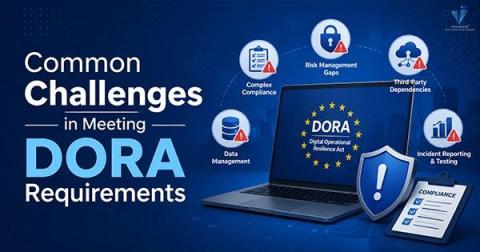
The Digital Operational Resilience Act is active. Yet most financial entities are still navigating significant implementation challenges. Here is what they are — and how to overcome each one.
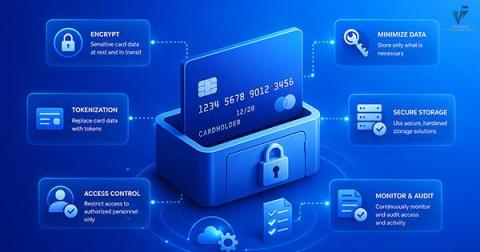
Businesses must never store CVV/CVC codes, full magnetic stripe data, or PINs under any circumstances. For PANs that must be retained, use AES-256 encryption with hardware security modules (HSMs) or, better yet, replace card data entirely with tokens via a PCI-DSS-compliant third-party vault. This removes raw card data from your environment and reduces your compliance scope from SAQ D (hundreds of controls) to SAQ A (as few as 22 controls).
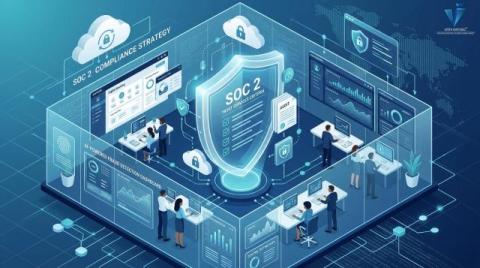
Rate this post Last Updated on June 8, 2026 by Narendra Sahoo Contents hide Why Fintech Companies Can No Longer Afford to Skip SOC 2 Type 2 What Is a SOC 2 Type 2 Report? (And Why Type 1 Is Rarely Enough) The Five AICPA Trust Services Criteria — Applied to Fintech Core SOC 2 Type 2 Audit Requirements for Fintech Companies The Practical SOC 2 Type 2 Audit Checklist for Fintech Companies Reading Your Audit Report: The Four Auditor Opinions Explained Frequently Asked Questions.
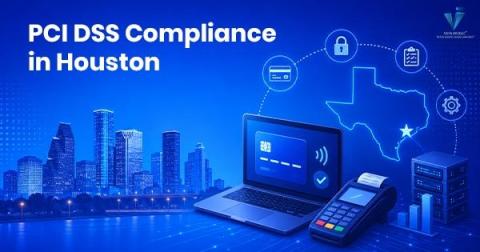
Houston is one of America’s most commercially active cities — a Fortune 500 corridor, a booming technology sector, and tens of thousands of small and mid-size businesses processing credit and debit card payments around the clock. Every one of those businesses is legally bound by a set of security standards that most owners know surprisingly little about: the Payment Card Industry Data Security Standard, universally referred to as PCI DSS.
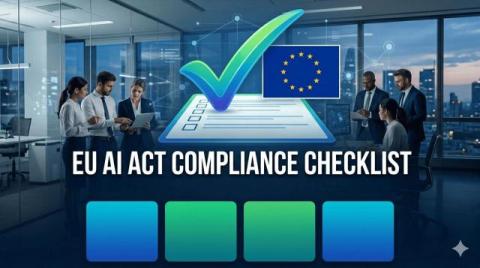
An EU AI Act compliance checklist is a structured framework that helps organisations systematically identify, classify, and govern all AI systems within scope of Regulation (EU) 2024/1689. It covers AI system inventory, risk classification (unacceptable, high-risk, limited, and minimal), conformity assessment requirements, technical documentation (Annex IV), human oversight obligations, GPAI model obligations, and post-market monitoring.
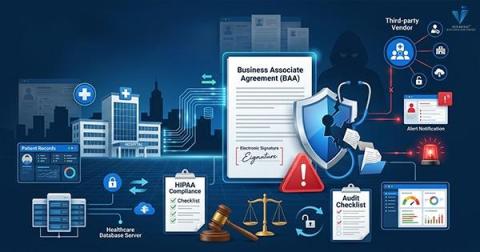
Rate this post Last Updated on May 11, 2026 by Narendra Sahoo Contents hide HIPAA Doesn’t Stop at the US Border Compliance by Design: Why Architecture Trumps Policy The Three Security Rule Safeguard Categories Engineering HIPAA Technical Controls Multi-Tenancy, Breach Notification, and Cross-Border Governance Cloud Security Operations: Keeping HIPAA Controls Alive The AI-Cloud Blueprint: HIPAA-Compliant AI in 2026 Frequently Asked Questions Conclusion: Build Compliance Into the Code.
PCI DSS controls are no longer just a compliance checkbox — they’re a mandatory security baseline that stands between your customers’ card data and sophisticated cybercriminals who are faster, smarter, and better-funded than ever before. According to the Nilson Report, global card fraud losses exceeded $33 billion in 2022 and are projected to surpass $38 billion by 2027.
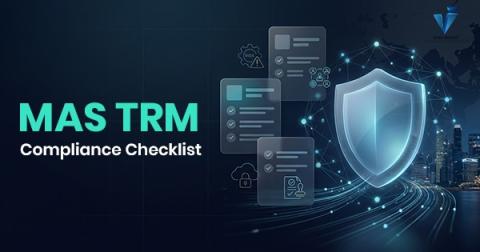
Singapore’s financial sector faces its most demanding regulatory environment yet in 2026. AI-powered cyberattacks, cloud-native banking infrastructure, and decentralised finance have pushed the Monetary Authority of Singapore (MAS) to sharpen its supervisory focus — and its expectations of every regulated institution. If you are a CISO, CTO, Head of Compliance, or technology risk officer at a Singapore financial institution, this guide answers the question your regulators are already asking.
Rate this post Last Updated on April 22, 2026 by Narendra Sahoo For EU financial entities facing DORA compliance, the prospect of simultaneously managing ISO 27001 and SOC 2 can feel overwhelming. The reality is far more encouraging: these three frameworks share deep structural overlap, and organisations that approach them as an integrated compliance program — rather than separate projects — can reduce compliance duplication by 40–60%.