Security | Threat Detection | Cyberattacks | DevSecOps | Compliance

Why Do You Still Need Security Awareness Training If You Use Phishing-Resistant MFA?

For years, KnowBe4 has been a long-time proponent of everyone using PHISHING-RESISTANT multi-factor authentication (MFA) whenever possible. Unfortunately, most MFA is as easily phishable, hackable, and bypassable as the passwords they were intended to replace. Even though KnowBe4 was an early proponent of phishing-resistant MFA, now most of the world is coming around, including NIST and CISA. Why Do I Need Training If I Am Already Using Phishing-Resistant MFA?

Verizon: Email Reigns Supreme as Initial Attack Vector for Ransomware Attacks

My analysis of this year’s newly-released Verizon Data Breach Investigations Report begins with ransomware findings that point back to users as a big problem. If you only read one report each year to give you an idea of what’s going on with cyber attacks, it’s Verizon’s Data Breach Investigations Report (DBIR). Each year, analysts sort through tens of thousands of data breach incidents (some successful, some not) and identify the attack patterns.

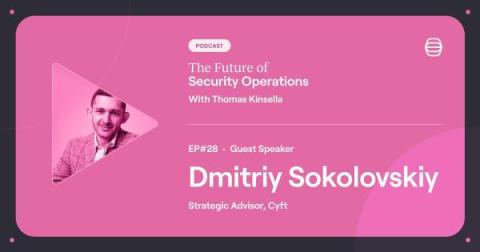
EP 29 - Synthetic Identity: Unmasking a New AI-Fueled Cyber Threat

Scattered across the internet are jigsaw puzzle pieces containing your personal information. If reassembled by an attacker, these puzzle pieces could easily compromise your identity. Our returning guest today is Len Noe, CyberArk’s resident transhuman (a.k.a. cyborg), whose official titles these days are Technical Evangelist, White Hat Hacker and Biohacker.

The University of Rochester Suffered a Data Breach to Its Students and Staff

The University of Rochester is a mid-sized school in New York State. It was founded in 1850 and has more than 12,000 students overall. The school maintains over 30,000 staff members overall and manages a large amount of data for all those individuals. Since data is largely digital today, the school is a major target for data breaches and identity theft. With breaches becoming so common today, it's not surprising the school suffered from a recent breach.

Application Vulnerability Management: The Complete Guide

Enterprise software applications are sophisticated, incorporating various technologies and featuring complex integrations with third-party software applications and systems. Any security vulnerability in software components can bring severe consequences to the organization. That’s why it is critical to effectively manage application vulnerabilities. This article explores application vulnerability management, discussing its importance and best practices.

Patch Management Explained: Challenges, Best Practices & Steps

Patch management is the centralized control and automation of the patch deployment process — deploying patches — to multiple devices, operating systems, firmware, software and hardware endpoints in the IT network. But vulnerabilities are increasing at unseen rates. Over 65,000 new vulnerabilities in existing IT systems were discovered in 2022, which is a 21% increase from 2021. And that makes patch management all the more important.

Announcing Insights: Helping you focus on top risks for your organization

Modern applications are built, deployed and, run in increasingly complex and dynamic environments. Assessing and prioritizing the security issues introduced by these applications without taking this context into account inevitably leads to focusing remediation efforts on the wrong set of issues. This not only results in real risk slipping under the radar but also wastes the valuable time of developers, increasing their frustration and eroding their trust in security.

SnykLaunch June '23: Insights and DeepCode AI enable faster fixes and prioritization

As we approach the second half of 2023, both security and development teams are seeing seismic shifts in the application security world. DevOps practices continue to evolve, meaning that developers are introducing code more and more rapidly, andwith the help of AI, developers of all kinds are able to create code faster than ever. Plus, apps aren’t just made up of first-party code and third-party dependencies anymore.