Security | Threat Detection | Cyberattacks | DevSecOps | Compliance

Unmanaged IoT Device Security: The Hidden Cybersecurity Risk Enterprises Can't Ignore

The rapid expansion of the Internet of Things (IoT) has fundamentally changed how organizations operate, enabling smarter, more connected enterprise networks. IoT devices—ranging from security cameras and smart TVs to advanced medical devices—are now embedded in nearly every aspect of business operations. These devices help organizations streamline processes, enhance productivity, and improve the management of critical systems.

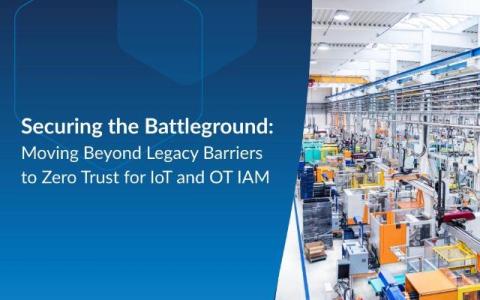
Securing the Battleground: Moving Beyond Legacy Barriers to Zero Trust for IoT and OT IAM

Identity and Access Management (IAM) is rapidly emerging as the next battleground in industrial cybersecurity. As connectivity increases in operational technology (OT) and IoT environments, the complexity of securing machine and human identities grows. Legacy systems, cultural resistance, and the tension between uptime and security controls make IAM adoption a major challenge for operators.

Automated IoT Lifecycle Security: Protecting Devices With Automated Lifecycle Management

The number of connected devices worldwide is projected to surpass 29 billion by 2030. From healthcare IoT and industrial OT to smart vehicles and critical infrastructure, these devices are now central to operations and innovation. The rapid evolution of IoT technology and its widespread adoption across industries have introduced new opportunities, but also new risks.

From Discovery to Compliance: How KeyScaler Simplifies Zero Trust for IoT

IoT and OT devices are now the backbone of modern enterprises — powering healthcare, manufacturing, automotive, and critical infrastructure. But with billions of devices in use worldwide, security and compliance are becoming increasingly complex and resource-intensive.

Healthcare IoT Security Breach 2025: Why Over 1 Million Devices Were Exposed

A recent healthcare IoT security breach exposed thousands of devices across multiple facilities, including connected medical devices and critical healthcare equipment used in hospitals. Sensitive patient information was compromised, putting not only privacy at risk but also threatening health insurance portability and compliance with the accountability act.

Zero Trust Is Broken Without Device Identity, But Not Irreparable

Zero Trust has become the gold standard for modern cybersecurity architectures, built on “never trust, always verify.” Yet a recent study by the Cloud Security Alliance reveals that nearly 1 in 5 organizations have experienced a security incident related to non-human identities, with only 15% remaining confident in their ability to secure them. The culprit? Device identity—the missing link that can render even the most sophisticated Zero Trust strategy ineffective.

Time for an IoT Audit?

IoT is everywhere, quietly powering everything from smart thermostats in homes to complex systems in industrial networks. While these devices bring incredible convenience and innovation, they also open the door to significant cybersecurity risks, especially in manufacturing and similarly sensitive sectors. The longer devices stay online, the more likely they are to become vulnerable due to outdated software, misconfigurations, or a lack of ongoing security management.

Zero Trust for IoT and OT: A Clear Path from Compliance to Confidence

Connected devices are powering transformation in every sector, whether it’s smart meters in energy, robotic arms in manufacturing, or infusion pumps in healthcare. But alongside innovation comes risk. More than 50% of connected devices have a known vulnerability, and with security breaches in IoT rising year over year, it’s no longer enough to bolt on protection after the fact.

How NIST, EO 14028, and CRA Are Shaping IoT Cybersecurity Compliance

In 2025, the regulatory environment for connected devices is shifting rapidly, with the regulatory landscape evolving due to new policies like the EU NIS2 Directive and related frameworks. As the risk of cyberattacks on critical infrastructure and IoT ecosystems increases, organizations face significant security challenges in this evolving environment.

Elastic and Armis integrate to deliver real-time IoT security insights

IoT and unmanaged devices are some of the toughest blind spots for security teams today, and attackers know it. That’s why we’re excited to team up with Armis — an expert in device discovery and risk assessment — to bring its real-time device data right into Elastic Security. By combining Armis’s rich telemetry with Elastic Security’s analytics, ES|QL querying, and Elastic AI Assistant, analysts get the full picture of their device landscape.