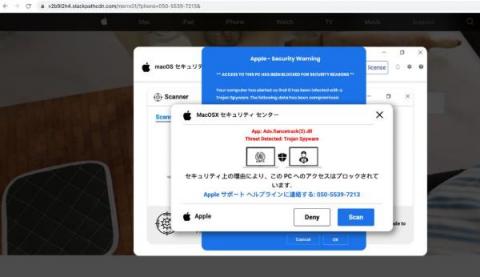
Ofwat, the water services regulator for England and Wales, has revealed that it has received over 20,000 spam and phishing emails so far this year. The Water Services Regulation Authority (better known as Ofwat) which is the government department responsible for regulating the privatised water and sewage industry in England and Wales, said it had received 21,486 malicious emails so far this year – with 5,149 classified as phishing attacks.
Hallowe’en is still months away, but Frankenstein is out trick-or-treating even as you read this, and the operative word here is “trick”. Payment fraud criminals continue playing their games with financial institutions’ (FIs) customers and online merchants.
As guardians of valuable monetary assets and highly sensitive data, financial institutions are the perfect target for cybercriminals. According to IBM, the financial services sector was the number one target of cyberattacks in 2020 among all industries. This means these organizations continue to be challenged and invest heavily in both people and technology to make sure they can withstand attacks of any type.
Protecting your applications from abuse of functionality requires understanding which application features and workflows may be misused as well as the ability to quickly identify potential threats to your services. This visibility is particularly critical in cases where an adversary finds and exploits a vulnerability—such as inadequate authentication controls—to commit fraud.
Phishing exercises are an important tool towards promoting security awareness in an organization. Phishing is effective, simply because it works. However, any social engineer can devise a marvelously deceptive message with an irresistible link that only the most tech-savvy person would spot as a phishing test. Sometimes, the phish can be sent at a time of day that catches the recipient off-guard, which causes a person to click the malicious link.
Countless phishing attempts are made every day, and with Covid-19 causing many organisations to move to remote working, phishing attacks have massively increased over the last year. In fact, last year’s Phishing and Fraud Report found that phishing incidents rose 220% during the height of the global pandemic compared to the yearly average.
In May 2020, Kroll was contacted by a purveyor of high-end meats after receiving several customer complaints of potentially fraudulent credit card activity. The fraud allegations were raised after several customers observed unauthorized transactions on their credit cards shortly after placing orders through the purveyor’s e-commerce website. Kroll quickly assigned one of their seasoned Payment Card Industry (PCI) forensics investigators to review and investigate the matter.
A few weeks ago Seattle-based financial services and data management firm Automatic Funds Transfer Services (AFTS) suffered a serious ransomware attack. A gang called “Cuba” hacked and stole approximately 20 months’ worth of AFTS data, including financial documents, correspondence with bank employees, account movements, balance sheets, and tax documents. The compromised data then was offered for sale on the dark web.