Security | Threat Detection | Cyberattacks | DevSecOps | Compliance

What Types of Security Capabilities Do Managed Service Providers (MSP) Offer?

Last time, I discussed the four basic types of managed service providers (MSPs) with which organizations commonly partner. Those categories help to determine the types of services offered by MSPs. In general, MSPs provide five primary services to customers.

Top 12 Cybersecurity Regulations for Financial Services

The proliferation of cyberattacks targeting the financial sector has forced the establishment of several mandatory cybersecurity regulations. Though often considered an unnecessary burden on security teams, regulatory compliance is one of the most effective strategies for keeping financial services accountable for their security posture. Cybersecurity regulations must be malleable to remain relevant in a rapidly evolving threat landscape.

What is SOC 2 and TSC along with Compliance and Certification

Managing security is not solely about products and technologies. As a security leader in your company, it is important to consider numerous other factors when you decide to set up a Security Operations Center. A few of the things include - an understanding of the business plan and requirement capability. It also includes the skill set of people who will be part of the Security Operations Center (SOC) for planning the individual and team responsibilities, budget, etc.

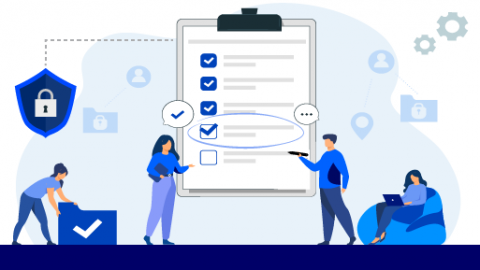
ISO 27001 Implementation Checklist

ISO/IEC 27001, commonly referred to as ISO 27001, is the most widely adopted international standard for managing data security and information security through an information security management system (ISMS). The standard was first published in 2005 by the International Organization for Standardization (ISO) and the International Electrotechnical Commission (IEC). ISO 27001:2013 is the latest revision to the standard.

How to Comply with GDPR: Key 10 Steps

The General Data Protection Regulation (GDPR) is designed to protect the personal data of EU residents by regulating how that information is collected, stored, processed and destroyed. The data security and privacy law applies to all organizations that collect the personal data of European Union citizens, regardless of location. The penalties for noncompliance with GDPR requirements are stiff. Many organizations are struggling with how to comply with GDPR.

ISO 27001:2013 compliance with Sysdig Secure

The ISO 27001 certification can make a difference when your business is tied with deploying cloud-native applications. Providing relevance and credibility in front of potential customers will show that your company takes security seriously, ensuring the client’s trust. We previously covered other compliance frameworks in our blog, like GDPR, HIPAA, NIST, and SOC 2. Those frameworks also show a strong commitment to security best practices.

5 Reasons Every AEC Firm Should Care about CMMC

Since the Cybersecurity Maturity Model Certification (CMMC) was released in January 2020, there has been a lot of hand-wringing over what it means and who should actually care. This is especially true for AEC firms, many of which figure this regulation only applies to big system integrators and defense contractors like Northrup Grumman and Boeing. But CMMC isn’t just about large enterprises. Any organization that currently contracts with, or plans to contract with the U.S.

Video Blog: How UKG Pro Helps with Open Enrollment and Year End

Through UKG Pro, NeoSystems provides Payroll Administration and Tax Management, Compliance, Benefits Management, Open Enrollment, Recruiting, and On-Boarding as well as property, skills, and certification tracking – all through a cloud-based manager & employee self-service platform.

Supply Chain Security, Compliance, and Privacy For Cloud-Native Ecosystems

Think of the software supply chain as every software element in your organization—from software development of internal systems to open source or third-party enterprise software to vendors, partners, and even past suppliers who still hold access to company data or IT systems. Attacks on this software supply chain can damage individual departments, organizations, or entire industries by targeting and attacking insecure elements of your software fabric.