Security | Threat Detection | Cyberattacks | DevSecOps | Compliance

PCI Compliance Test: Ensure Your Business Meets PCI DSS Requirements

Every business that processes credit card transactions knows that security is important. But, when asked whether they actively test their systems for PCI DSS compliance, many often assume their payment processor has it covered. This assumption could later turn out to be costly. PCI DSS compliance doesn’t mean you outsource your payment processing to a secure provider but actually protect every endpoint where cardholder data is stored and processed.

CMMC Level 2 Documentation: What Auditors Want to See

If you’re part of the defense industrial base and you’re seeking CMMC certification, there’s a very good chance you’re aiming for Level 2. Level 1 is mostly meant for businesses with a focus on federal contract information but not CUI, while Level 3 is meant for businesses handling the most sensitive kinds of CUI; since most businesses fall somewhere in the middle, Level 2 is the most common.

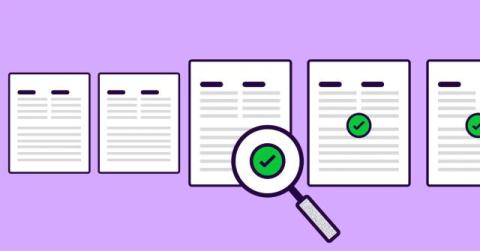
Guide to working with auditors: Best practices for startups

Navigating an audit can be complex and time-consuming, but the right preparation and approach can make the process much smoother. Whether you're working toward SOC 2, ISO 27001, or another framework, knowing when to engage auditors, how to provide access, and what to focus on during the audit will set you up for success. ‍ In this guide, we’ll walk through best practices for working with auditors—from initial engagement to ongoing audit management and post-audit steps. ‍

Who needs to comply with NIS 2? Scope, requirements, and penalties explained

NIS 2 is a new EU directive that establishes a unified cybersecurity framework for specific organizations within Member States. Compared to the original NIS directive, the scope has been expanded, and compliance is mandatory for in-scope organizations. ‍ The broader scope means that while NIS 2 is EU-specific, some organizations outside the Union may also be subject to its requirements.

Strengthening Healthcare Security: Navigating HIPAA's Latest Cybersecurity Requirements

The Department of Health and Human Services (HHS) will be implementing sweeping and crucial updates to the Health Insurance Portability and Accountability Act (HIPAA) Security Rule to enhance the protection of electronic protected health information (ePHI). These changes aim to address modern cybersecurity threats and ensure resilience in healthcare data management. In this blog, we will explore the key updates and their implications for healthcare providers and their business associates.

12 Best Practices for Banking & Finance Cybersecurity Compliance

Financial data has always been a prime target for cybercriminals due to its high value. Therefore, banks, loan services, credit unions, and investment and brokerage firms are highly vulnerable to cyberattacks. Moreover, security incidents in the financial sector are extremely costly (surpassed only by the healthcare industry), with the average total cost of a data breach reaching $6.08 million in 2024.

Compliance Plus Library Reaches 800 Pieces of Content

It seems like only yesterday that we launched the Compliance Plus training library as a result of customers asking us to address their needs beyond security awareness training. The team and I were just looking at our first few months where we had just over 20,000 customer completions in June of 2021. We have since had millions of users complete our content and the library has grown from 115 pieces of content at launch to over 800 pieces of content.

ISO 27001 Tools & Services: Empower Your Business with Stronger Information Security

In today’s rapidly evolving digital ecosystem, organizations are entrusted with an unprecedented volume of data. As cyber threats become more sophisticated and compliance demands grow increasingly stringent, establishing a strong information security posture has never been more critical. ISO/IEC 27001, an internationally recognized standard, serves as the foundation for building a comprehensive Information Security Management System (ISMS).

How Security Operations and Defensive Analysis (SOC-200) Can Strengthen Your Cybersecurity Skills

Cybersecurity is more critical than ever in today's digital world. With cyberattacks on the rise and organizations facing threats from all angles, the demand for skilled cybersecurity professionals continues to grow. As cyber threats become more sophisticated, the need for well-rounded professionals who can monitor, defend, and respond to these attacks is at an all-time high. One effective way to develop these skills is through Security Operations and Defensive Analysis (SOC-200). This course offers hands-on learning that can significantly strengthen your cybersecurity expertise.