Security | Threat Detection | Cyberattacks | DevSecOps | Compliance

Introducing Persona AI: AI for identity operations

Persona AI brings AI directly into the Persona identity platform. It helps teams verify identities, review cases, investigate fraud signals, and apply their own policies to make faster, more consistent decisions. Many identity decisions still need people to do the work by hand: collecting evidence, screening, flagging risk, interpreting policy and routing cases. Persona AI is built into the platform, so it works directly with your identity data, risk signals, policies and workflows.


Stopping candidate fraud with Persona's head of talent

Recruiters everywhere are seeing hundreds, if not thousands, of fake candidates, and it goes well beyond AI-polished resumes. Natalie, Persona's head of talent, talks with Michael, an account executive on Persona's Workforce Identity team, about what candidate fraud looks like from the recruiter's chair, why Zoom interviews and flying people on site aren't enough, and what changed after Persona added automated identity verification to its own hiring process.

Q&A between researchers who are improving deepfake detection

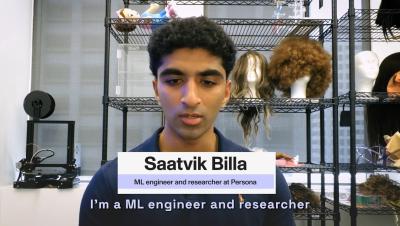
In the real world, attackers don't just generate a selfie, submit it, and move on. If one attempt fails, they’ll refine the image and try again. Existing datasets often fail to account for these variations, leading the researchers’ detection models to fall short in real-world scenarios. Zhaofeng Si, a PhD student at University at Buffalo who interned at Persona as a research scientist, and Saatvik Billa, an ML engineer and researcher at Persona, worked together this summer on a fraud taxonomy and a real-world selfie fraud benchmark.

Persona Research investigates big questions in online identity

Persona Research studies identity and trust. We advance methods for making online identity verification safer, fairer, and more accurate. We think this work is important because identity is fundamental to how people access services, form communities, and participate online. And we want to protect people without limiting their agency or access. Timestamps: Read more about Persona's research team, publications, and grant program: research.withpersona.com.

Why academic selfie fraud benchmarks fail in the real world

Academic deepfake datasets rarely static: generate an image, label it real or fake, done. Real-world fraud doesn't hold still. Zhaofeng Si, a PhD student at University at Buffalo and research scientist intern at Persona, breaks down the gap. Public academic datasets are mostly typical face swaps and diffusion-model-generated images with a fixed label. In the real world, there's an attack-and-defense loop. Fraudsters actively probe for ways to bypass detection, so defenses have to keep adapting instead of training against a static benchmark.