Security | Threat Detection | Cyberattacks | DevSecOps | Compliance

Private App Access, Zero Network Change

As organizations advance toward Security Service Edge (SSE), secure access to private applications has become a practical priority. Executives rightly expect these programs to improve security while increasing agility. Yet many initiatives slow down at the same point: extending access to private applications. The work often depends on firewall exceptions, routing changes, and cross-team coordination, followed by tightly controlled maintenance windows.
What Consistent Leadership Across SSE, SD-WAN, and SASE Signals

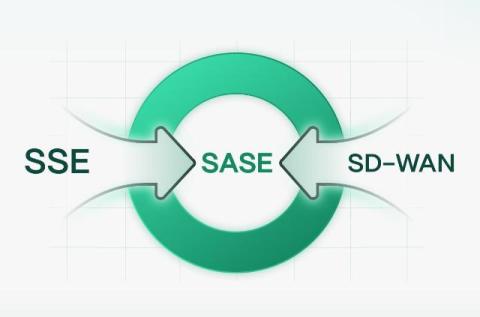
GigaOm’s latest analysis highlights a clear shift in the market. As they note, “The standalone Secure Service Edge (SSE) market has largely disappeared, with leading vendors now offering complete SASE solutions that converge software-defined wide-area network (SD-WAN) and SSE into single-vendor platforms. Organizations increasingly favor this consolidated approach to reduce operational complexity and improve visibility.”

Cato CTRL Threat Brief: AI, Zero-Days, and the US-China Cyber Arms Race

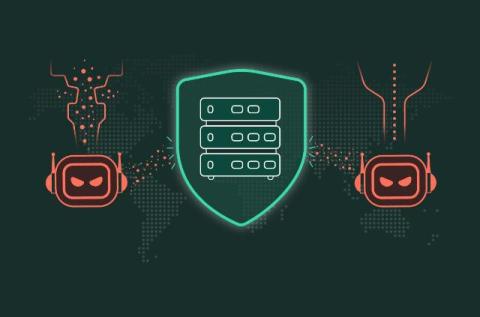
Underlying the US–China AI race, there’s arguably a more sinister arms race—the race to identify zero-day threats. Frontier AI algorithms, such as Anthropic Mythos (here) and China’s Qihoo 360 (here), are compressing the zero-day discovery cycle. But how those discoveries are gathered and shared among cooperating entities is giving China significant defensive and offensive advantages.

Defending Against the Next Generation of Agentic Attacks

The attack lifecycle is compressing. Frontier AI models like Anthropic’s Mythos and OpenAI’s GPT-5.5-Cyber can help bad actors research vulnerabilities, test approaches, adapt code, and change delivery methods at machine speed and scale. That reduces the time, skill, and coordination needed to move from vulnerability discovery to active attack. When attacks behave this way, security needs to operate in real time with full visibility and context across the attack path.

Cato Private Access: Zero Trust Access Without the Operational Overhead

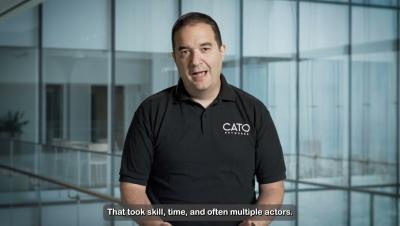
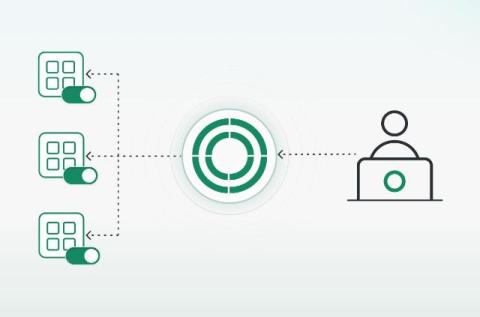
Most organizations understand the need for Zero Trust access to private applications. The challenge is delivering it without creating operational bottlenecks, increasing network risk, or slowing projects with weeks of coordination. In this video, Chris Rudolph explains how Cato Private Access enables secure, application-level access to private applications without requiring routing updates, inbound firewall changes, or complex network redesigns.

Stop Treating AI Like Another SaaS App

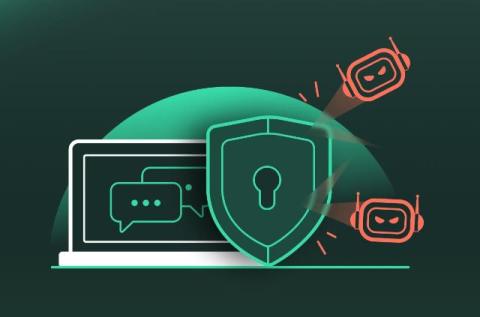
Employees are leveraging AI to boost productivity and adopt skills that would take years to learn. This ranges from drafting content, writing code, and building automated workflows. Some of this use is approved. Much of it is not. For many security teams, the first instinct is to treat this risk like they would any other SaaS risk: discover the app, allow or block access, apply DLP rules, and report on usage. That model works for traditional SaaS, but AI is different.

Making Security Data-Aware with New Integration from Cato Networks and Cyera

Today, Cato Networks announced an integration of Cato XOps with the Cyera AI-native Data Security Platform Management (DSPM). The integration brings Cyera’s data security telemetry directly into Cato XOps, giving security teams visibility into the sensitivity and exposure of data involved in security events. In today’s distributed environments, data lives across the cloud, SaaS, endpoint, and network.

Frontier AI and the Demise of Hardware Security

The cybersecurity industry has long relied on a simple idea: find vulnerabilities, patch them, and measure success by how fast you close the gap. “Time-to-patch” became a badge of honor. That model no longer holds. The rise of Mythos-class Frontier AI Models introduces a different kind of threat. AI-driven, agentic attacks operate continuously, discover weaknesses automatically, and execute at a scale no human team can match.

Cato CTRL Threat Research: Suspected China-Linked Threat Actor Targets Global Manufacturer with Undocumented TencShell Malware

In April 2026, Cato CTRL identified and blocked an attempted intrusion against a global manufacturing customer involving TencShell, a previously undocumented, Go-based implant derived from the open-source Rshell C2 framework. The activity appeared in traffic associated with a third-party user connected to the customer environment.

Audit Ready by Design: Continuous Compliance Posture You Can Prove

Think of your environment like a medical clinic. Patients with new “symptoms” show up every day, such as an overly permissive firewall rule or a missed TLS inspection policy. A good doctor triages the most severe case and prescribes the right fix before the “symptoms” escalate.

Beyond Patch SLAs: Continuous Protection in the Frontier AI Era

Frontier AI is changing the economics of cybersecurity. Advanced models can accelerate vulnerability research, exploit-path analysis, attack planning, and disclosure workflows, making vulnerability discovery more continuous, automated, and AI-driven. This raises the bar not only for enterprises that need faster protection, but also for cybersecurity vendors that must adapt secure development, production security, runtime validation, incident response, and AI-assisted workflows to keep pace.

Threat Brief: CVE-2026-41940: Critical cPanel & WHM Authentication Bypass Actively Exploited in the Wild

CVE-2026-41940 is a critical authentication bypass vulnerability in cPanel & WHM, including DNSOnly, and WP Squared. The issue affects cPanel software versions after 11.40 and can allow an unauthenticated remote attacker to gain unauthorized access to exposed hosting control panels. cPanel released patched versions and published official remediation and detection guidance.

Cato Joins OpenAI's Trusted Access for Cyber (TAC) to Advance AI-Driven Defense

Over a decade ago, Cato Networks helped shift cybersecurity to a new frontier: a converged, cloud-native platform that combines security and networking. As a long-time security researcher, the Cato platform was a radical change, providing researchers with the rich context and end-to-end visibility we needed to identify threats faster and deliver accurate protections.