Security | Threat Detection | Cyberattacks | DevSecOps | Compliance

See, Govern, and Secure All AI Usage in Your Enterprise

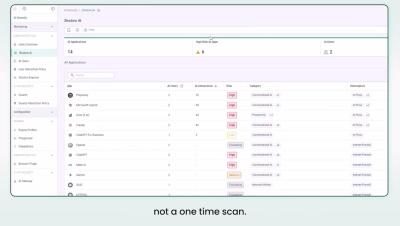
Do you happen to know which AI tools your employees are using right now, or what data they're sending into them? Cato AI Security automatically discovers every AI application in your environment, provides security teams with session-level visibility into how those tools are being used, and enforces data policies in real time, so employees can keep working and sensitive data stays where it belongs.

Securing Agentic AI: Why Visibility, Behavior, and Guardrails Matter

Agentic AI is quickly transitioning from experimentation to production. Enterprises are deploying AI agents to interpret goals, decide what actions to take, interact with business tools and APIs, and execute those actions autonomously, with limited or no human oversight. The promise is speed and efficiency, but the proverbial “blast radius” is bigger and fundamentally different from anything security teams have managed before.

Secure Enterprise AI Apps and Agents: Visibility, Governance, Runtime Protection

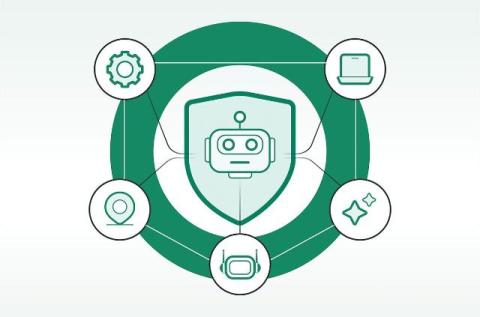
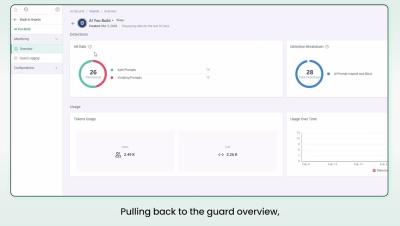
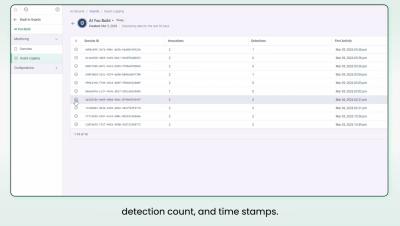
When you deploy an AI application, do you know what's being sent into it — or what's coming back out? Cato AI Security provides runtime protection for the AI applications your organization builds and deploys, with real-time enforcement, sensitive data anonymization, and a complete audit trail across every interaction.

WebPromptTrap - New Indirect Prompt Injection Vulnerability in BrowserOS

Cato researchers have discovered a new indirect prompt injection exploit pattern workflow in BrowserOS (an open-source agentic AI browser). We named it “WebPromptTrap” because the prompt originates from untrusted web content and it traps users into approving an authorization step through a trusted-looking AI summary.

When Quantum Turns Encryption Into a Time Problem

If your encrypted traffic was captured today, would it still be private in ten years? That question changes the conversation. Leaders are used to asking, “Is it encrypted?” Now they are asking, “How long does it stay confidential?” That is where post quantum cryptography, or PQC, comes in. Its role is to strengthen the foundations of a secure connection by improving how trust is established before any data is exchanged. Today’s encryption still works.

Where Cato Sits in the AI Economy

Every major technological shift reshapes the landscape, creating both winners and losers. AI will be no different. The key question is which companies are positioned to capture the value it generates, and which ones may fall behind as it unfolds. If you look at previous technology shifts, the winners were not always the companies building the most visible products. They were often the ones that enabled the shift to happen in the first place, or those that benefited from the structural changes it created.

Cato CTRL Threat Research: Vishing and Microsoft Teams Used to Deliver PhantomBackdoor

Cato CTRL has discovered a q-based delivery technique used against an Italy-based consumer services company associated with PhantomBackdoor, a multi-stage WebSocket-based backdoor previously reported in a Ukraine-focused spear phishing operation by SentinelOne. In SentinelOne’s earlier reporting, initial access relied on phishing lures and a ClickFix-style flow that triggered a staged PowerShell and ended with a WebSocket backdoor.

Secure Enterprise AI Apps and Agents: Visibility, Governance, Runtime Protection

When you deploy an AI application, do you know what's being sent into it — or what's coming back out? Cato AI Security provides runtime protection for the AI applications your organization builds and deploys, with real-time enforcement, sensitive data anonymization, and a complete audit trail across every interaction. Learn more or request a demo at catonetworks.com.

Meet the Industry's First GPU-Powered SASE Platform with Native AI Security

AI has moved from experimentation to a strategic enterprise imperative. It’s no longer about whether organizations will adopt AI, but whether their security architecture can govern it at the speed and scale at which it is being embedded into the business. This is not a future concern. It is today’s operational mandate to: Securing AI is not limited to software applications and agents.

Cato AI Security: Is Your Security Stack Built for How AI Works?

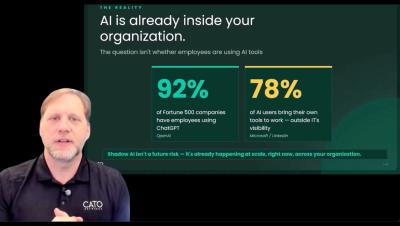
AI adoption is accelerating across enterprises — often faster than security teams can respond. Employees are using AI tools and copilots across SaaS apps and workflows, creating new exposure around sensitive data, shadow AI, and attack surfaces that traditional tools weren't built to see. This video breaks down the four AI security challenges every enterprise is facing, where existing controls fall short, and how Cato AI Security gives you visibility, guardrails, and enforcement across the AI your employees use, the applications you build, and the agents acting on your behalf.

Code Review That Learns: Inside Cato R&D's Self-Evolving PR Review Agent

Agentic AI promises to improve work processes in all domains and industries. R&D is no different. Recently, Cato R&D built an internal self-evolving pull request (PR) review agent that keeps reviewers in flow by commenting only on high-impact, high-confidence issues, validating every change against its spec from the PR and Jira, and learning continuously from developer feedback through long-term, episodic memory. What were the results?

Cato CTRL Threat Brief: Middle East Escalation and Summary of Notable Iranian-Linked CVEs

On February 28, 2026, Israel and the United States launched a joint attack against Iran. In retaliation, Iran launched its own attacks against Israel and US-allied countries and bases in the region. The escalation in the Middle East is ongoing. Cato CTRL is currently monitoring the threat landscape in the region.

AI in Cybersecurity Certification

Positive feedback can lead to unintended consequences. A dog learned that saving kids from the River Seine earned food and praise. So he started dragging them in to “save” them. AI models optimize for feedback in a similar way. Cato’s AI in Cybersecurity course shows how to manage the risks. It’s free and earns you CPE credits.

When the M&A Deal Closes, Is Your Architecture Accelerating Time to Value?

Imagine two talented orchestras playing together, but without a conductor or a single score. You get noise, not music. M&A can be like that. The value lies in having every musician on the same page. Traditional networking slows M&A execution. Cato delivers a cloud-native foundation that securely connects the new organization from day one, aligns policies and workflows under a single framework, and helps leadership realize value faster.

Highlights from the 2026 Cato CTRL Threat Report

Today, we published the 2026 Cato CTRL Threat Report, which is the second annual threat report on AI security from Cato CTRL (the Cato Networks threat intelligence team). In 2025, Cato CTRL uncovered a decisive shift in the AI threat landscape. Threat actors are no longer just exploiting AI systems. They are exploiting AI trust, workflows, and capabilities themselves.

OpenClaw: Cato Governance Controls and Sector Exposure Insights from the Cato SASE Platform

Agentic AI does not just answer, it acts. The moment an agent has a reachable control plane, you have effectively created a “remote hands” interface into your environment. In our recent blog post, “When AI Can Act: Governing OpenClaw,” we explained why this shift breaks old security assumptions and why governance must be continuous, enforced, and context-aware rather than a one-time checklist.

Cato Networks Named a SASE Industry Leader and Outperformer for the THIRD Consecutive Year

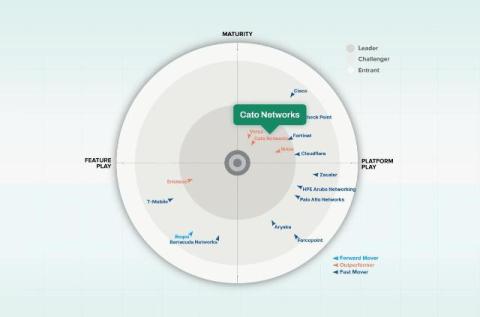
Cato Networks has been named a Leader and Outperformer in the 2026 GigaOm Radar for Secure Access Service Edge (SASE) — marking the third consecutive year we’ve earned this distinction. And, once again, Cato is positioned closest to the center of the Radar, of all participants. In this year’s GigaOm Radar for SASE, Cato is positioned in the Maturity/Platform Play quadrant, reflecting the depth, completeness, and enterprise readiness of the Cato SASE Platform.

AI certificate

You can ask AI to create a song that sounds like a famous band sang it. But what happens if you use it or share it? Are there legal or other implications? AI tools must be visible and governed. Shadow AI isn’t. Take Cato’s AI in Cybersecurity course to understand the risks of unsanctioned AI tools. It’s free, comes with a downloadable cert, and earns CPE credits. Register now.

Cato CTRL Threat Research: New MongoDB Vulnerability Allows Instant Remote Server Takedown (CVE-2026-25611)

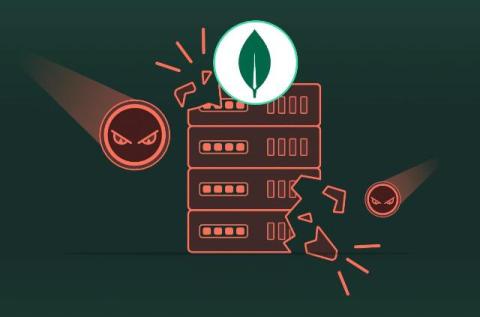
Cato CTRL’s Vitaly Simonovich (senior security researcher) has discovered a new vulnerability (CVE-2026-25611 with a “High” severity rating of 7.5 out of 10) in all MongoDB versions with compression enabled (version 3.4+, enabled by default since version 3.6), including MongoDB Atlas. The vulnerability can enable a threat actor to crash any MongoDB server. MongoDB Atlas clusters are not internet-reachable by default.

From Alerts to Action: Dynamic Prevention

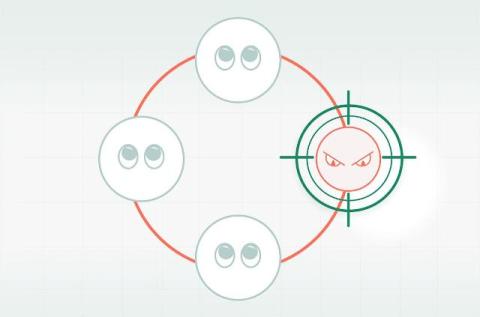
In 2020, the SolarWinds compromise showed how far attackers can go when they look legitimate. Instead of breaking in loudly, threat actors tampered with trusted software updates and gained access that appeared routine to many defenses. The U.S. government later assessed that roughly 18,000 customers installed affected Orion updates, and a smaller subset experienced follow-on intrusion activity, often discovered only after time had passed.

The Post-Quantum Journey Begins: Enforce, See, and Evolve with Quantum-Safe SASE

Encrypted data has a shelf life, and for many organizations it must remain secret for years. The post-quantum risk is not a dramatic collapse of encryption, but a quieter threat: attackers harvesting encrypted traffic today so they can decrypt it in the future. That is why post-quantum readiness is increasingly a board and CEO-level responsibility, with the CISO leading execution, because quantum risk threatens long-term business stability, compliance expectations, and trust.