Security | Threat Detection | Cyberattacks | DevSecOps | Compliance

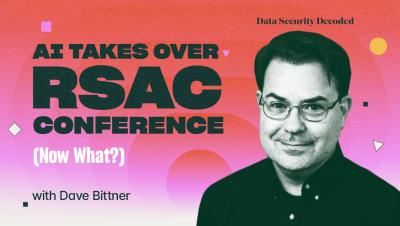
AI Takes Over RSAC Conference (Now What?) with Dave Bittner

In this RSAC 2026 Conference recap, Dave Bittner, Host of the CyberWire Daily podcast, joins Data Security Decoded host Caleb Tolin from the guest seat to discuss the biggest theme dominating the conference: artificial intelligence, and, more specifically, agentic AI. From wall-to-wall AI messaging across San Francisco to in-depth conversations with security leaders and analysts, one thing became clear: the industry has moved past debating whether AI will take hold. It already has. Now, the focus has shifted to making it safe.

Ransomware in Healthcare: It's Disruption, Distraction, and Data Theft

Ransomware attacks are about disruption, distraction, and data theft happening at the same time. Nelson Carreira breaks down how modern threat actors operate. While one attack disrupts operations, another may be quietly exfiltrating sensitive data. That complexity is why healthcare organizations must prepare for recovery environments that allow clinical operations to continue safely while production systems are rebuilt.

Why Incident Response Fails (And It's Not the Technology)

Incident response plans rarely fail because of technology. It’s usually because of coordination, or the lack of. Nelson Carreira explains why organizations that build isolated recovery environments should use them not only for recovery testing but also to strengthen incident response planning. Simulation exercises reveal a critical need: clear roles, leadership authority, and secure communication channels during a crisis.

Cyber Resilience in Healthcare: Why Recovery Starts at the Endpoint

On this episode of Building Cyber Resilience: A Healthcare Leader’s Guide, Nelson Carreira explains why recovery planning in healthcare has to consider the entire environment, from user devices to network architecture. In large incidents, the blast radius can extend far beyond servers, sometimes forcing organizations to rebuild tens of thousands of endpoints before operations can safely resume. As he puts it.

What Happens When Healthcare Systems Go Dark

• What happens inside a healthcare system when ransomware takes down Active Directory and authentication fails? In this episode, Josh Howell sits down with Nelson, Executive Healthcare Strategist at CDW, to explore real-world cyber incidents and the architectural shifts required to recover safely. You’ll learn: YouTube Chapters Final Lessons for Healthcare Leaders If you enjoyed this episode, be sure to subscribe to our YouTube channel.

Camille Stewart Gloster on how AI systems can help you wade through log data and get more done

AI and machine learning are already being used in cybersecurity to help reduce the "noise of all the indicators" that security teams receive. These systems can serve as a "first line of defense" by setting up potential response actions. However, organizations need to ensure they keep human analysts in the loop because contextual knowledge and human judgment remain critical. Data Security Decoded is available on our YouTube channel!

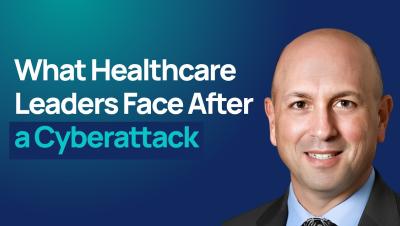
What Healthcare Leaders Face After a Cyberattack

In this episode of Building Cyber Resilience: A Healthcare Leader’s Guide, host Josh Howell speaks with Errol Weiss, Chief Security Officer at Health-ISAC. Drawing on decades of experience across government, finance, and healthcare, Errol walks through what leaders actually face in the hours and weeks following a cyberattack. The conversation explores why healthcare remains a top ransomware target, how uncertainty shapes recovery decisions, and why trusted, anonymous information sharing has become one of the sector’s strongest defenses.

What is Agentic AI vs GenAI?

Everyone knows ChatGPT, but Agentic AI is where the real work happens. In this Agentic AI vs GenAI breakdown, we explain why Agentic AI is the next major leap, and what it means for your business and career. Here’s the difference: Generative AI (GenAI): Creates content. You ask, it writes, summarizes, or creates. Agentic AI: Does work. It is built on three core components: a brain (reasons), memory (context), and tools (the key that lets agents touch real systems like APIs and databases).

Daniel dos Santos on defending against opportunistic cyberattacks

Complicated, targeted attacks aren’t the only methods you should be on the lookout for. Security fundamentals are important for defending against opportunistic that can cause chaos! On this episode of Data Security Decoded, Daniel dos Santos (VP of Research, Forescout Technologies) and host Caleb Tolin explore attacker motivations, common entry points, and what defenders must prioritize now. Listen to the full episode on our YouTube channel, or wherever you get your podcasts.

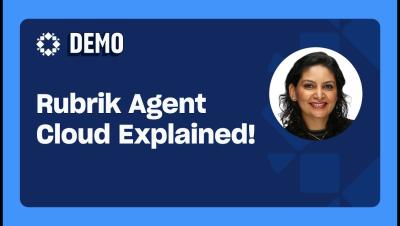
Rubrik Agent Cloud Explained!

AI agents are active across your enterprise, yet most teams lack visibility into their actions or access to them. This video introduces Rubrik Agent Cloud, offering a Centralized Registry for full agent visibility and Policy-based Governance to monitor and block unauthorized actions in real time. And for the rogue agent, quickly undo damage with Agent Rewind.

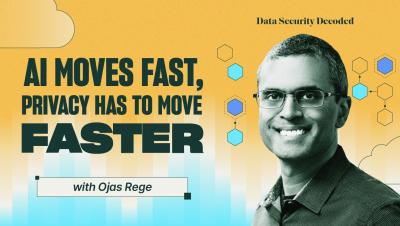
AI Moves Fast, Privacy Has to Move Faster with Ojas Rege

In this episode, Caleb Tolin welcomes Ojas Rege of OneTrust for a practical, wide-ranging conversation on how data privacy and governance must evolve alongside enterprise AI adoption. Ojas explains why AI fundamentally changes the privacy conversation: the same systems that enable organizations to move faster can also cause harm faster when guardrails aren’t in place. From agentic AI systems that dynamically repurpose data to general-purpose models that blur traditional notions of “intended use,” the challenge isn’t just compliance—it’s trust.