Security | Threat Detection | Cyberattacks | DevSecOps | Compliance

September Release Rollup: Improvements in Prompt Library, Autodesk Construction Cloud Integration, and More

We’re excited to share new updates and enhancements for September, including: For more information on these updates and others, please read the complete list below and follow the links for more detailed articles.
Bridging Enterprise Content and AI: Introducing Egnyte's LangChain Integration

In the rapidly evolving landscape of enterprise AI, the ability to seamlessly connect organizational knowledge with intelligent systems is a critical differentiator. While LLMs excel at reasoning and generation, their true potential is unlocked only when they can access and process the vast repositories of institutional knowledge driving your organization’s business decisions.

Where Construction Collaboration Meets Secure AI: Egnyte at Procore Groundbreak 2025

From October 14–16, thousands of construction professionals will gather in Houston, Texas, for Procore Groundbreak 2025—one of the industry’s premier events for innovation and collaboration. Egnyte is proud to return as an exhibitor to showcase how our AI-powered platform integrates seamlessly with Procore to deliver smarter, more secure ways to manage project and business data.

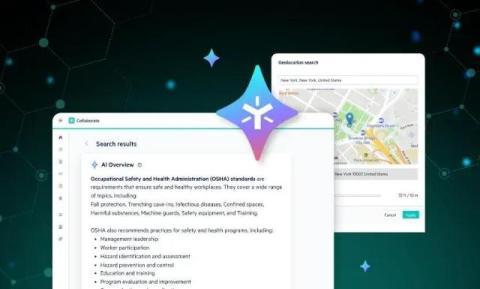
Transform Information Discovery with Egnyte's AI-Powered Search

Modern businesses are drowning in content. Documents, presentations, images, audio recordings, videos, the volume grows exponentially every day. Traditional search tools, built on outdated keyword matching, simply can't keep pace. They only help users find information if they know what to look for and what keywords to use. This inefficiency comes at a cost: delayed decisions, missed opportunities, and frustrated teams spending more time searching than working. The solution?

Egnyte Unveils AI Agents to Boost Efficiency and Reduce Risk for the Architecture, Engineering, and Construction Industry

Egnyte announces its first industry-specific AI agents specifically designed to support the unique needs of the Architecture, Engineering, and Construction (AEC) industry. These AEC AI agents target some of the most time-consuming and costly parts of the process, from bid to completion, by addressing some of the most labor-intensive tasks involving often very complex documents.

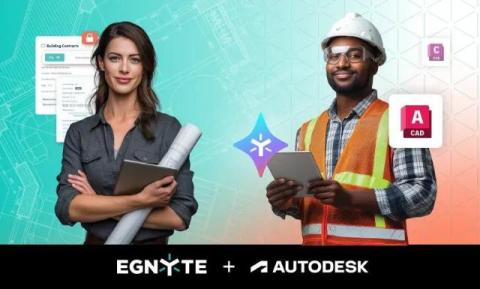
AI-Ready AEC: Building a Smart Digital Foundation With Autodesk and Egnyte

Every week, I hear from firms eager to explore how artificial intelligence can speed up workflows, improve quality, and unlock new ways of working. But here’s the reality: AI is only as good as the data behind it. Without a solid foundation of structured, governed, and secure information, AI’s potential quickly crumbles.

The Case of the Phantom Date: How a Single Pixel Fooled Our Visual AI

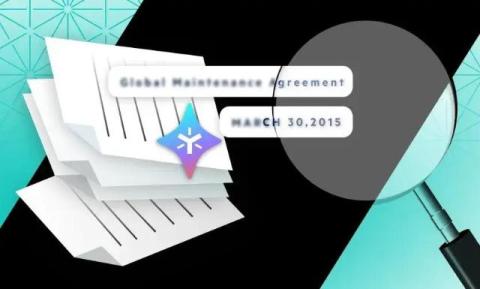
We’ve all seen it: a cutting-edge, multimodal LLM, capable of understanding complex documents, stumbles on a seemingly simple task. In our case, the model confidently reported a contract’s signing date as "March 30". The only problem? The document clearly stated "March 9th". It wasn't just a minor error; it was a baffling one that sent us down a rabbit hole of debugging.

Turn Your Projects into a Living Knowledge Base

Every construction project generates knowledge: lessons learned in the field, submittals and specifications worked through in design reviews, and RFIs that clarify how to build smarter. Yet, when a job is completed, much of that hard-earned wisdom vanishes—lost in inboxes, outdated folders, or disconnected drives. This phenomenon—what some call the knowledge drain—costs contractors more than just time. It leads to redundant work, missed insights, and costly rework.

From Rework to Readiness: How Contractors Can Operationalize Lessons Learned

Every project brings surprises. Maybe it’s an ambiguous spec that created delays. Or an RFI that clarified critical field conditions. Or a detail missed during handoff that led to costly rework. The gap between knowing and doing is evident when: Most contractors experience these issues, document them somehow, and then move on. The challenge isn’t that lessons aren’t learned—it’s that they aren’t operationalized.