Security | Threat Detection | Cyberattacks | DevSecOps | Compliance

The Latest Cybersecurity News & Insights From Around The World




Nx npm Malware Explained: AI Agent Hijacking
Nx npm malware (Aug 2025): attackers published malicious Nx packages that weaponized AI coding agents (Claude Code, Gemini CLI, Amazon Q) via a postinstall script to inventory sensitive files and exfiltrate sensitive data to public GitHub repos named “s1ngularity-repository-*.” We break down what happened, affected versions, and how to check + respond (rotate credentials, hunt IoCs, and more). Resources.

How to use Snyk Advisor (Completely Free!)
How to use Snyk Advisor (Completely Free!)

Why you Should NOT Rely on GPT-5 for Code...
Why you Should NOT Rely on GPT-5 for Code...

Weaponizing AI Coding Agents for Malware in the Nx Malicious Package Security Incident
On August 26–27, 2025 (UTC), eight malicious Nx and Nx Powerpack releases were pushed to npm across two version lines and were live for ~5 hours 20 minutes before removal. The attack also impacts the Nx Console VS Code extension.
The Surprising Truth About GPT-5 in Cursor's Agent Mode
In this video, I test out GPT-5 by asking it to build a simple and secure Node.js notes app that lets users create, read, update, and delete notes. I run two experiments — one without a security MCP server and one with it — to see how well the new model handles both functionality and security.


How to Ensure the Integrity of your AI Conversations...
How to Ensure the Integrity of your AI Conversations... =
Secure at Inception for AI with Snyk
Snyk helps you find and fix vulnerabilities in your code, open-source dependencies, containers, infrastructure-as-code, software pipelines, IDEs, and more!

Developer's NEED to be Aware of this...
Developer's NEED to be Aware of this...
Prioritize with Snyk's Open Source Vulnerability Experience
Prioritizing which vulnerabilities to fix across your application isn't always easy. Is it exploitable? Is it reachable? Will the update introduce breaking changes? Are there any other teams using this library that you should be aware of? What does the backlog look like if other changes need to be made? And that's just this week. Next week, it'll be the same thing all over again, with new discoveries, new version releases, and maybe even a new cybersecurity breach.

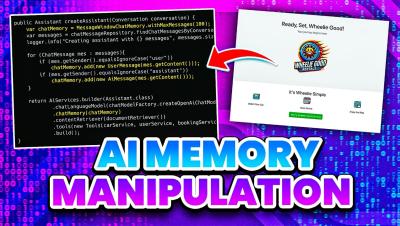
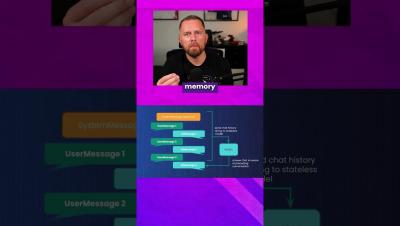
AI Chat Memory Manipulation
AI chatbots are getting smarter – but what happens when you control what they remember? In this video, I’ll show you step-by-step how AI memory can be manipulated, how that changes the way it responds, and the hidden risks this creates for both users and developers.

Snyk Found a Security Vulnerability in My Code
Snyk Found a Security Vulnerability in My Code.

Fixing Outdated Code from Claude Opus 4.1 & GitHub Copilot
Fixing Outdated Code from Claude Opus 4.1 & GitHub Copilot.

Claude Opus 4.1 and Github Copilot Causes a Coding Error
Claude Opus 4.1 and Github Copilot Causes a Coding Error.

AI Agents in Cybersecurity: Revolutionizing AppSec
We're witnessing a paradigm shift from reactive security tools to proactive, intelligent defenders. AI agents represent the next evolution beyond traditional security systems, fundamentally changing how we approach cybersecurity.

Claude Opus 4.1 & Copilot: The ULTIMATE Coding Combo?
Claude Opus 4.1 & Copilot: The ULTIMATE Coding Combo?

Agentic Container Security with Snyk MCP Server
Did developers steal the spotlight of agentic workflows with the wave of AI coding assistants sweeping the media, startups, and tech? What about DevOps workflows, container security, and operating system vulnerability scanning? One of the most time consuming tasks of application security engineers and those responsible for production artifacts is tracking Common Vulnerabilities and Exposures (CVEs) and in what way they impact a bundled application.

Can Claude Opus 4.1 Improve My Code Security?
Anthropic just dropped Claude Opus 4.1, a major upgrade over Opus 4 for agentic tasks, real-world coding, and reasoning. In this episode, we put it through the same secure Node.js app challenge we’ve used for previous models, so you can see exactly how it stacks up!

MCP Server Management Options in VS Code
MCP Server Management Options in VS Code Check out the full video.

Meeting the AI Mandates with Confidence: Why Federal Teams Trust Snyk
Federal agencies are moving fast to unlock AI's potential—from improving citizen services to driving mission outcomes. But with all that innovation comes a new wave of complexity and risk. Security, trust, and transparency can’t be afterthoughts. They need to be part of the build and AI adoption process from day one. AI-driven development is exponentially increasing both code speed and code insecurity, as AI generates code with up to 40% more vulnerabilities than human developers.

Snyk Supercharges API Discovery with New Akamai Integration
Today, Snyk is launching a powerful enhancement to our API discovery capabilities through a strategic partnership with Akamai. This integration is designed to solve one of the most significant challenges in modern application security: the difficulty of providing API schemas for DAST scanning. By directly ingesting API inventories and their corresponding schemas from Akamai, we are transforming a difficult manual process into a seamless, automated workflow within the Snyk platform.
From Ideas to Impact: How the Bay Area Is Shaping the Future of Secure AI
Generative AI is reshaping how software is made, secured, and scaled. At Snyk’s Lighthouse event in Silicon Valley, leaders from engineering, security, and platform teams gathered to explore one big question: How do we build AI-powered systems that move fast, without breaking trust? For many, that future is already here — 60% of organizations at the Summit reported building agentic apps internally. The answers weren’t just technical. They were cultural. Organizational. Strategic.

The Hidden Costs of False Positives in Healthtech Security
When we talk about healthcare today, it’s impossible not to consider application security. As healthcare providers increasingly lean on digital solutions to deliver patient care, they are creating an explosion of healthcare data requiring protection to ensure its confidentiality, integrity, and availability.
Snyk Joins CISA's Secure by Design Pledge
As the Chief Information Security Officer at Snyk, my primary role is to ensure the security and integrity of our products, our systems, and our customers' data. But my responsibility extends beyond our walls. It involves championing a vision for a more secure digital world—a vision I am proud to say we share with the U.S. Cybersecurity and Infrastructure Security Agency (CISA).

Secure at Inception: Introducing New Tools for Securing AI-Native Development
At Snyk, we believe you should never have to choose between speed and security. As the age of AI transforms software development, our goal is to extend our developer-first security approach to this new era, providing the essential tools your teams need to build with confidence. Today at Black Hat, we are delivering on that vision with three tangible innovations that offer a comprehensive solution to secure the entire code lifecycle with AI.

How to Add MCP Servers to VS Code (with GitHub Copilot)
In this tutorial, I’ll walk you through the step-by-step process of adding MCP servers to Visual Studio Code using GitHub Copilot. Whether you’re setting up your first MCP server or integrating multiple ones for AI-assisted workflows, this guide will help you get started quickly.

When "Private" Isn't: The Security Risks of GPT Chats Leaking to Search Engines
In late July 2025, users discovered that ChatGPT chats, initially shared via link, were appearing in search engine results on platforms such as Google, Bing, and DuckDuckGo. These shared conversations included personal content relating to mental health, career concerns, legal issues, and more, without any indication of a data breach. Instead, the exposure resulted from a now-removed feature that enabled discoverability via search indexing.