Getting the benefits of AI threat detection tools is becoming less of an option for security operation centres (SOCs). Last year, the UK experienced more cyber attacks than any other country in Europe. According to IBM’s X-Force Threat Intelligence Index report, nearly half (43%) of all cyber attacks in Europe targeted UK-based organisations.
When I wrote my first applications in high school, coding was a lot more time-consuming. I didn’t have libraries I could shop through with ready-made bits of code to drop in to save myself time or bridge the gap between the pieces of code I could write to create something more complex. Instead, I had to write everything from scratch. If I wanted to include any kind of image, I would have to draw it with mathematical coordinates, which took a ton of time.
In 1999, a far-fetched movie about a dystopia run by intelligent machines captured our imaginations (and to this day, remains my favorite film). Twenty-four years later, the line between fact and fiction has all but vanished and the blockbuster hits much differently. Are we entering the Matrix? Are we already in it? Can anyone be sure?
This MIT Technology Review headline caught my eye, and I think you understand why. They described a new type of exploit called prompt injection. Melissa Heikkilä wrote: "I just published a story that sets out some of the ways AI language models can be misused. I have some bad news: It’s stupidly easy, it requires no programming skills, and there are no known fixes.
Security AI usage has surged, and enterprises are reaping the benefits. In its 2022 Cost of a Data Breach Report, IBM found that organizations deploying security AI and automation incurred $3.05 million less on average in breach costs – the biggest cost saver found in the study. According to the study, organizations using security AI and automation detected and contained breaches faster. However, while leveraging AI clearly makes a difference, organizations must implement the right architecture.
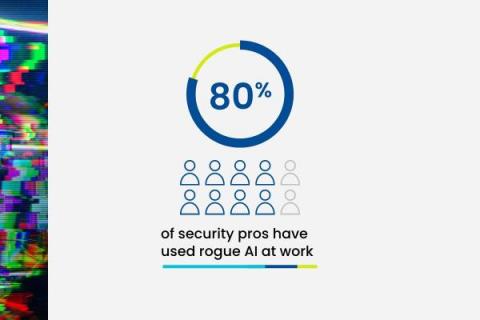
When ChatGPT debuted in November 2022, it ushered in new points of view and sentiments around AI adoption. Workers from nearly every industry started to reimagine how they could accomplish daily tasks and execute their work — and the cybersecurity industry was no exception. Like shadow IT, new rogue AI tools — meaning AI tools that employees are adopting unbeknownst to the organization they work for — can pose security risks to your organization.
As a leader in applying AI to developer security, Snyk’s approach is unique. Today, we want to provide a glimpse at how Snyk currently uses AI and data science, as well as a sneak peek at what’s to come. Before diving in, we want to highlight two aspects of Snyk’s use of AI to set the stage.
In a groundbreaking move, Italy has imposed a ban on the widely popular AI tool ChatGPT. This decision comes in the wake of concerns over possible misinformation, biases and the ethical challenges AI-powered technology presents. The ban has sparked a global conversation, with many speculating whether other countries will follow suit.