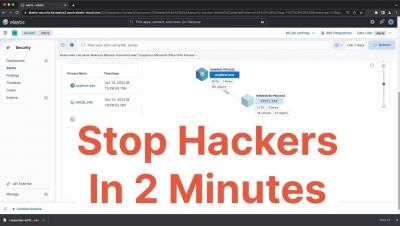
2Torial: Protect All of Your Endpoints with Elastic Security
Use Elasticsearch and Agent to protect all of your endpoints and take action when malicious actors threaten your environment.


When developers need to handle URLs in different forms for different purposes — such as browser history navigation, anchored targets, query parameters, and so on — we often turn to Java. However, its frequent use motivates attackers to exploit its vulnerabilities. This risk of exploitation is why we must implement URL validation in our JavaScript applications.
As head of the product department at Azalea Health, I need to understand what our market needs. Based on the conversations that we've had with hospitals and clinics, enterprise-grade security is something they desperately need but rightfully expect their EHR system to provide. That’s why it’s important for our organization to take the responsibility of securing health data off their shoulders.
Have you noticed it’s never “Hey, someone got by a firewall” or “WOW, they bypassed the network security”? No. It’s always about the Device. It’s the same for hackers because everything else is just a means to an end, and that end is your Device! Imagine, late at night, driving around the Amusement Park security gate, then busting open the locked gated fence. These actions are necessary to get to the big score, the Rides! Yaaahoo!
Nowadays, we do virtually everything online: book flights, pay for goods, transfer bank funds, message friends, store documents, and so on. Many things we do require giving out sensitive information like our credit card details and banking information. If a website uses an unsecured network, a malicious hacker can easily steal user information. This is why encryption is so important.
In its 2022 Cost of a Data Breach report, IBM notes that for 83% of companies, it’s not if a data breach will happen — but when. The sheer volume of data, as well as the difficulty in monitoring shadow IT and the shift to remote work, means that IT security teams face a persistent and ever-changing risk landscape that makes it extremely difficult to keep information secure. Protecting sensitive data starts with data discovery.
Considering managed it security services? It is more important than ever to have a resilient security posture. Hackers are constantly looking for ways to exploit weaknesses in systems, and even a small data breach can have devastating consequences.
In Part 3, CrowdStrike’s Endpoint Protection Content Research Team covered the finer points of Input/Output Control (IOCTL) usage by various wipers. The fourth and final part of the wiper series covers some of the rarely used “helper” techniques implemented by wipers, which achieve secondary goals or facilitate a smaller portion of the wiping process.