Security | Threat Detection | Cyberattacks | DevSecOps | Compliance

RFP Essentials for Account Takeover Fraud Solutions: A Procurement Guide

The digital landscape is currently witnessing an industrialization of fraud. Legacy defenses, once considered standard, are now struggling to keep pace with sophisticated attackers who operate with the speed of AI. For enterprises, the Request for Proposal (RFP) process is no longer just a bureaucratic hurdle. It is a critical opportunity to filter out reactive “band-aid” fixes and identify account takeover (ATO) fraud solutions that provide preemptive protection.

Preemptive Defense Is No Longer Optional: Why Frost & Sullivan Is Calling for Earlier Fraud Intervention

Preemptive cybersecurity defense refers to the ability to detect and disrupt fraud and account takeover attempts before credentials are misused and damage occurs. According to a 2026 analyst brief from Frost & Sullivan, most enterprise fraud and cybersecurity controls still activate too late in the attack lifecycle to prevent loss.

Shift Left Security: Compress Time-to-Detect and Reclaim Hours for High-Impact Work

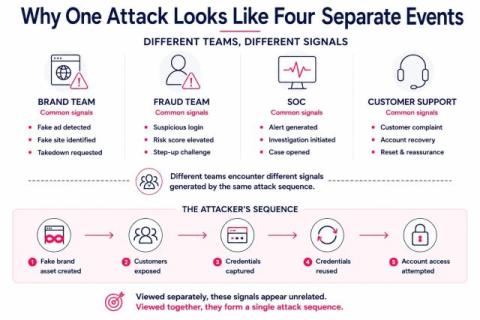
Imagine this: a customer clicks a paid search ad that looks exactly like you. Same logo. Same layout. Same tone. They enter credentials. They hand everything to a scammer. Your team finds out later. When the fraud case lands. When the customer complains. When a suspicious login alert finally fires. That’s not a tooling problem. It’s a timing problem. Shift-left security is how you get the time back.

Account Takeover Fraud in 2026: How Attacks Really Happen and How to Stop Them Before Impact

Account takeover (ATO) fraud is a critical threat to digital businesses. Despite heavy investment in MFA and login anomaly detection, many attacks succeed because they bypass traditional safeguards entirely. Modern ATO doesn’t start at the login screen. It begins upstream with pre-login exposure and real-time credential relay, allowing attackers to hijack sessions before traditional defenses even engage.

It's About Time: Why Memcyco Raised $37M, and Why Now

Digital fraud hasn’t stood still. Attackers have adopted automation, refined tooling, and improved coordination across phishing, impersonation, and account takeover (ATO). In that sense, fraud has become smarter in how it’s delivered and scaled. But this form of sophistication isn’t primarily about more complex technical breaches, and it doesn’t explain why losses continue to rise even as enterprises deploy increasingly advanced security controls.

The CTI Pivot: Weaponizing Decoy Data Against Airline ATO

That question reflects a growing reality inside airline security teams. Account takeover is no longer a downstream fraud event. It is an access-layer problem driven by adversaries who specialize in impersonation, reverse proxies, and rapid monetization of loyalty accounts. For Cyber Threat Intelligence teams, the mission is not to clean up after fraud. It is to disrupt adversary capability early, attribute campaigns accurately, and break the kill chain before customer harm occurs.

ITSP / StudioC60 features Memcyco in latest podcast.

Real-Time Defense Against AI-Driven Account Takeover: How Memcyco Protects Organizations and Their Customers Memcyco recently featured in an ITSP Magazine podcast episode snippet, which this post is based on. You can listen to the full feature here. Our thanks go to the podcasters for having our CEO, Israel Mazin, on with them.

ITSP Magazine: Real-Time Defense Against AI-Driven Account Takeover

Memcyco recently featured in an ITSP Magazine podcast episode snippet, which this post is based on. You can listen to the full feature here, or below. Our thanks go to the podcasters for having our CEO, Israel Mazin, on with them. Account takeover attacks are surging, fueled by off-the-shelf phishkits and AI tools that make it faster and cheaper for bad actors to impersonate trusted brands and steal customer credentials.

Attack Surface Management in 2026: The 4 Exposure Layers ASM Can't Cover

Exposure management in 2026 is no longer defined by how many assets you can scan. It is defined by where visibility and control still exist when attacks move from discovery to execution. Most modern attacks do not exploit misconfigurations or unpatched systems. They exploit trust. In fact, according to Statista, the usage of valid credentials is now the joint-top initial access vector globally (30%), tied with software exploitation.