Security | Threat Detection | Cyberattacks | DevSecOps | Compliance

What to Expect from the UK Cyber Security & Resilience Bill

In April 2025, the UK government released its Cyber Security & Resilience Bill policy statement—marking a major overhaul of the UK’s cyber regulations. This introduces sweeping changes that will resonate deeply with IoT/OT device operators and manufacturers alike.

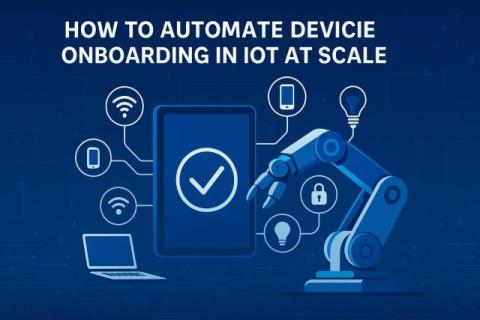
How to Automate Device Onboarding in IoT at Scale

Device onboarding encompasses the entire process of integrating new IoT devices into an organization’s network infrastructure, from initial discovery and authentication to configuration management and ongoing monitoring. This process becomes exponentially complex as device populations grow and diversify. Traditional onboarding approaches often rely on manual configuration, pre-shared keys, or simple certificate-based authentication that requires significant human intervention.

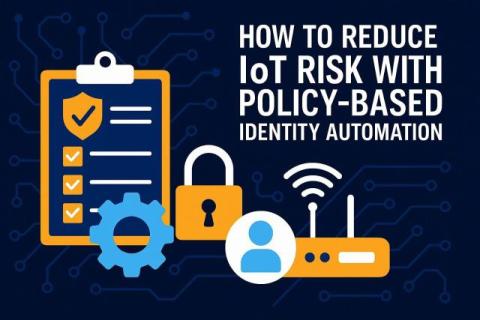
How to Reduce IoT Risk with Policy-Based Identity Automation

Policy-based identity management transforms security administration from individual device and user management to comprehensive policy frameworks that automatically govern identity lifecycle, access controls, and security enforcement across entire IoT ecosystems. The key elements of policy-based identity management include defining user roles, managing user access, implementing identity governance, and leveraging role based access control to ensure appropriate access and compliance.

2025 Trends in IoT Device Identity and Access Management (IAM)

As the number of IoT devices and connected devices continues to surge, IoT security has become a critical component of the modern IoT ecosystem. Ensuring the confidentiality, integrity, and availability of data across IoT networks is essential to protect against cyber threats and data breaches. With billions of devices now connected to the internet, the attack surface for malicious actors has expanded dramatically, making robust security measures more important than ever.

Device Authority Azure Integration: How It Provides Seamless Security with Microsoft Azure IoT

Microsoft Azure IoT provides a comprehensive platform for IoT development and deployment, but organizations implementing large-scale production deployments often encounter limitations in Azure’s native security and identity management capabilities that require additional solutions to address enterprise requirements. Device Identity Management Limitations in Azure IoT Hub center around the platform’s reliance on symmetric keys or self-signed certificates for device authentication.

CISO Guide to Machine Identity Lifecycle Management: What CISOs Need to Know

Machine identity lifecycle management has evolved beyond a technical implementation challenge to become a fundamental component of enterprise risk management and digital transformation strategy. As a core element of a modern cybersecurity strategy, machine identity management ensures that organizations can effectively protect their digital assets and adapt to evolving threats.

Zero Trust for IoT: Best Practices for Secure Device Access

IoT security has become a top priority in today’s hyper-connected world, where billions of devices—from sensors and cameras to industrial controllers—are linked across diverse networks. As organizations deploy more IoT devices to drive innovation and efficiency, they also introduce new security challenges that traditional security models are ill-equipped to address.

WP.29 and Beyond: How India and China Are Driving Automotive Cybersecurity

It’s been nearly three years since UNECE WP.29 regulations came into force for new vehicle types in Europe, and the global ripple effect is in full motion. WP.29 laid the groundwork for how cybersecurity is handled across the automotive lifecycle – from design and development through post-production and updates. But what’s happening beyond Europe?

Keyscaler vs Traditional PKI Comparison: Which Is Better for IoT Security?

Traditional Public Key Infrastructure represents the established approach to certificate management that has evolved over three decades to support enterprise IT environments. Built on hierarchical certificate authorities (CAs) and manual or semi-automated processes, traditional PKI was designed for relatively static environments with manageable numbers of certificates and predictable lifecycle patterns.

TLS Certificate Validity Cut from 398 to 47 Days: Why Automation Is Now Essential for IoT Security. The alternative is the cost of human error.

In a significant shift for digital identity management, the maximum lifespan of public TLS certificates is set to be reduced to just 47 days, following a new policy from Apple’s Root Program. With Google expected to follow suit, the clock is ticking faster than ever on certificate validity and that has profound implications for businesses relying on manual processes.