Security | Threat Detection | Cyberattacks | DevSecOps | Compliance

License Compatibility: Combining Open Source Licenses

Free and open source software (FOSS) components have become the basic building blocks of our software products, helping today’s developers build and ship innovative products faster than ever before. Many developers tend to forget that while open source licenses are free, they still come with a set of terms and conditions that users must abide by.

Why You Need an Open Source Vulnerability Scanner

No one wants to be the next Equifax. Just thinking about their company’s name being in a headline along with the words “security breach” is enough to keep CISOs up at night. Much like Fight Club, however, the first rule of data breaches is: You do not talk about security breaches...unless you’re mandated by notification laws like GDPR. Even though organizations don’t reveal much publicly, their concern is reflected in the amount of money spent to prevent cyber attacks.

Dynamic Application Security Testing: DAST Basics

Application security testing (AST), which are tools that automate the testing, analyzing, and reporting of security vulnerabilities, is an indispensable part of software development. In a modern DevOps framework where security is shifted left, AST should be thought of as compulsory. And this has never been more important when you consider that Forrester reports the most common external attack method continues to be application weaknesses and software vulnerabilities.

Everything You Wanted to Know About Open Source Attribution Reports

Open source components are a major part of the software products we create and use. Along with the many advantages that using open source projects brings to software development organizations, it also comes with obligations and added responsibilities. One of these requirements is open source licensing compliance.

Interactive Application Security Testing: IAST Basics

Because applications and software vulnerabilities are the most common external point of attack, securing applications is a top priority for most organizations. An essential component for reducing this risk is application security testing (AST). In this blog, we focus on interactive application security testing (IAST), the relative newcomer in the AST market.

When's the Right Time for an Open Source Audit?

How much do you really know about your open source usage? Can you identify what open source components you’re using? How about which licenses are in play and whether you’re compliant? Do you have a good sense of how many open source security vulnerabilities are in your code base and how to remediate them? Chances are, if you’re like most organizations, you can’t answer all of these questions.

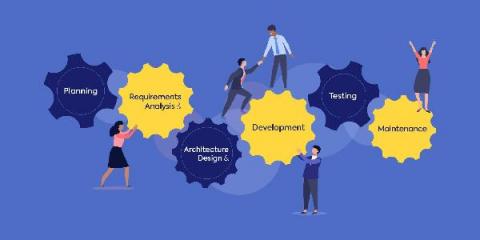
Software Development Life Cycle: Finding a Model That Works

Waterfall. Agile. Scrum. Kanban. Lean. These words are often thrown around when talking about the software development life cycle (SDLC), but what do they mean and how do they relate to each other? In this blog, we’ll take a look at the evolution of the software development life cycle and consider several current trends.

WhiteSource Attribution Report: New Features

We are excited to announce the immediate availability of WhiteSource’s new attribution report. Our attribution report gives you insight into the compliance requirements of your open source components, including detailed data on your licenses, copyrights, and notices. WhiteSource’s new attribution report features numerous enhancements to the overall user experience.

CI/CD and the Promise of Agile Transformation

Continuous integration/continuous delivery, more commonly known as CI/CD, promises to help software companies become more agile by delivering software faster and more reliably. The goal of CI/CD is to reduce software development and delivery timelines from months or weeks down to days or even hours. It does this by pushing frequent updates and fixes regardless of size and using automation tools to help the process run smoothly.